1. What exactly is FD RYZE® Nexus?
FD RYZE® Nexus is a governed enterprise knowledge assistant purpose-built for specific departments and connected to your existing SharePoint and document repositories. It delivers grounded, traceable answers with role-based access control, runs on your infrastructure, goes live in 48 hours, and is benchmarked at 89–92% accuracy with 40% lower cost than Azure.
2. Is this just a chatbot?
FD RYZE® Nexus can be described as a chatbot at the interface level, but that misses the governance, traceability, and enterprise architecture underneath. It is built to turn internal documents into reliable answers that teams can use for work where accuracy and context matter.
3. We already have Microsoft Copilot. Why do we need FD RYZE® Nexus?
Copilot makes your Microsoft apps smarter, while FD RYZE® Nexus makes your institutional knowledge accessible. Copilot helps users draft emails, summarize meetings, and work across Microsoft tools; FD RYZE® Nexus creates purpose-built, governed knowledge assistants for specific departments, with custom scope, RBAC, and traceable answers grounded in proprietary data. They solve different problems and can work together.
4. How long does implementation take?
Technical deployment usually takes 2–5 business days from data access to first working assistant. Client-side processes such as security reviews, procurement, data access permissions can add 1–3 weeks. We start both tracks in parallel to avoid losing calendar time.
5. What data sources does FD RYZE® Nexus connect to today?
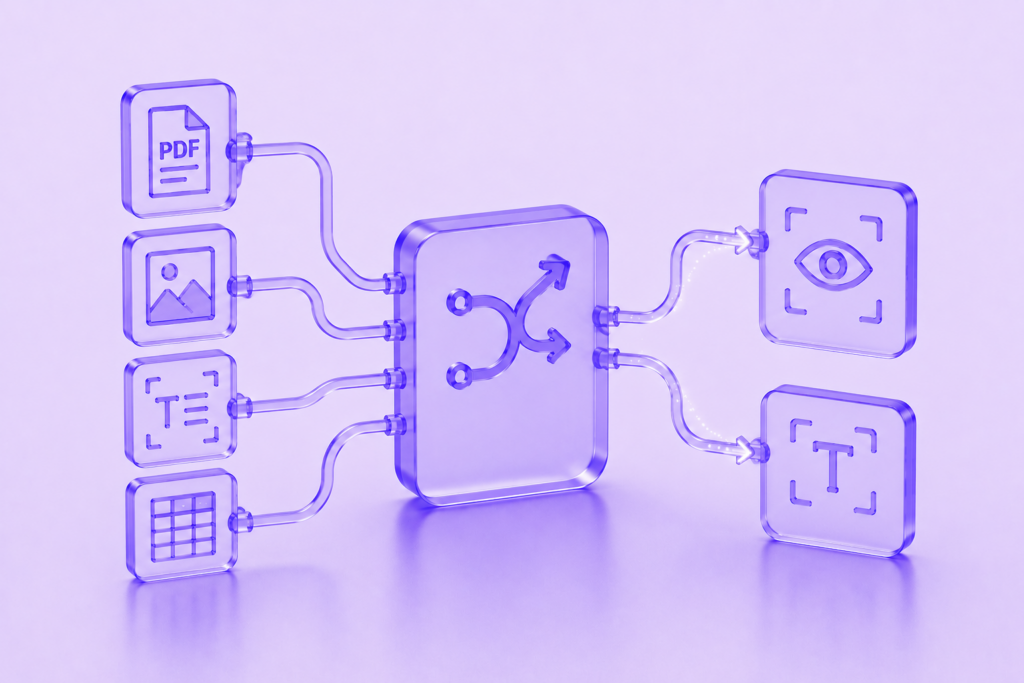
FD RYZE® Nexus currently connects to SharePoint, document repositories, PDFs, Word documents, spreadsheets, and folder structures. These sources cover the majority of enterprise knowledge retrieval use cases, with Salesforce, Jira, Confluence, ServiceNow, SAP, and custom API connectors on the roadmap.
6. How do you ensure our data stays secure?
Your data never leaves your infrastructure. Nexus can be deployed on your cloud environment, including Azure, AWS, or GCP, or on-premise, with RBAC from Day 1, a full audit trail on every query, no training on your data, and answers that are traceable to their source documents.
7. Why is FD RYZE® Nexus non-SaaS?
FD RYZE® Nexus is designed for enterprise customers in BFSI, insurance, and healthcare, where data sovereignty requirements are often non-negotiable. Regulatory frameworks in these industries prohibit sending proprietary documents to third-party infrastructure. So deployment within the customer’s own environment is part of the design.
8. How is FD RYZE® Nexus priced?
FD RYZE® Nexus pricing is based on the assistant or department, not on the number of users. Get in touch with the team for a detailed price list and savings analysis, including the model’s 40%+ saving vs Foundry and $6.2K Year 1 saving per customer.
9. How does your benchmark methodology work?
FD RYZE® Nexus was tested on two public, industry-standard datasets: Cord V2 for real-world documents and Synthdog for synthetic test data. The benchmark measured six parameters: Text Fidelity, Semantic Accuracy, Numeric Reliability, Completeness, Hallucination Control, and Overall Accuracy, using the same LLM, pricing tier, and deployment region on both sides. The full methodology can be shared, and customers are encouraged to reproduce the test on their own documents.
10. What if the pilot does not deliver?
If the pilot does not deliver, the team will explain what was found and why the expected numbers were not achieved. Pilot shortfalls are usually linked to data quality issues, which are assessed during scoping before the engagement begins. If the results do not support the case by Week 4, the pilot can stop there.