Artificial intelligence systems use AI to process inputs and produce predictions, recommendations, decisions, or content. Learn how AI systems work and the main types.
Quick Answer
Artificial intelligence systems are machine-based systems that use AI to process information and produce outputs such as predictions, recommendations, classifications, decisions, or generated content. An AI system can combine models with data, applications, rules, integrations, infrastructure, and human oversight to perform a defined function.
Artificial intelligence systems vary widely in purpose and complexity. Some predict an outcome or classify information. Others generate text or images, support decisions, or carry out permitted actions across connected systems. The term AI powered systems is often used for applications or technologies in which AI performs a meaningful part of how the system works.
What is an artificial intelligence system?
An artificial intelligence system is a system that uses one or more AI techniques to interpret inputs and produce an output that supports or performs a task. The output might be a prediction, recommendation, classification, generated response, decision, or action, depending on what the system is designed to do.
An AI system is broader than the model it uses. A customer-service system, for example, may combine a language model with customer records, knowledge sources, authentication, business rules, APIs, and an interface through which employees or customers interact with it.
Similarly, an AI-based fraud system may combine transaction data, predictive models, rules, risk thresholds, case-management software, and human review. The AI provides a capability within the system, while the surrounding technology determines how that capability receives information and how its output is used.
That wider technical structure is defined through AI system architecture, which maps the components, connections, data flows, deployment environment, and controls needed to make an individual AI system work.
Enterprise AI systems can therefore range from relatively narrow applications built around one task to more complex systems that interact with multiple data sources, models, applications, and business processes.
How do AI systems work?
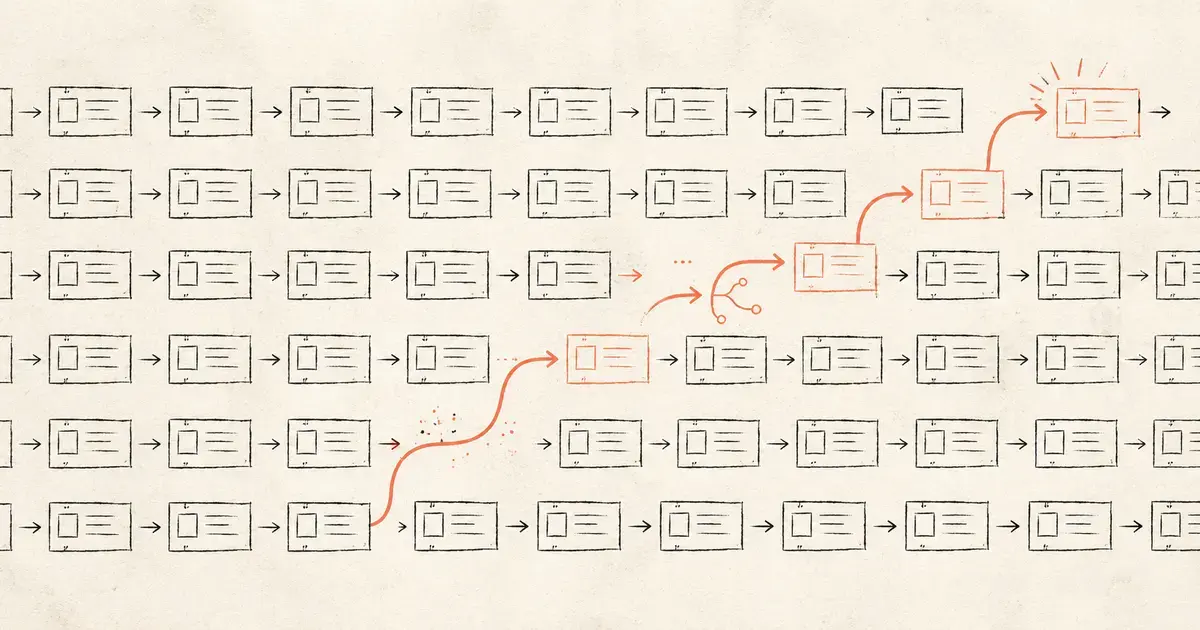
AI systems generally work by receiving information, processing it using models or other AI techniques, and producing an output that can be presented to a user, passed to another system, or used to determine what happens next. Some systems also use feedback from their outputs or outcomes to improve or adjust their performance over time.
At a high level, the process can include:
- Input: The system receives data such as text, images, audio, transactions, sensor information, documents, or application data.
- Processing or inference: An AI model or other decision mechanism evaluates the information according to the task the system has been designed to perform.
- Output: The system produces a result such as a prediction, classification, recommendation, generated response, score, or decision.
- Application or action: The result may be shown to a person, written into another application, used within a workflow, or passed to another component.
- Feedback: Where appropriate, new outcomes, corrections, or performance information can be used to evaluate how well the system continues to work.
Not every AI system follows every step in the same way. A recommendation engine may continuously process new behavior, while a document-classification system may simply receive a file, classify it, and send the result to another application.
As systems become more complex, their operation can also depend on integrations, permissions, monitoring, and other components beyond the model itself.
What are the main types of AI systems?
AI systems can be grouped according to the kind of work they perform, including prediction, content generation, decision support, and autonomous or goal-directed action. These categories can overlap because one system may combine several AI capabilities to perform a larger task.
Common forms include:
Predictive AI systems: Analyze historical or current data to forecast an outcome, identify a pattern, estimate risk, or classify information. Examples include demand forecasting, fraud detection, predictive maintenance, and risk scoring.
Generative AI systems: Produce new content such as text, images, code, summaries, or responses based on prompts and available context.
Decision-support AI systems: Analyze information and provide recommendations, scores, or insights that help a person or another system determine what to do.
Autonomous and agentic AI systems: Can determine steps, use tools, or carry out permitted actions with varying degrees of independence. Autonomous systems can respond to changing conditions and act within defined boundaries, while agentic AI applies goal-directed reasoning and action within AI-driven software environments.
These categories describe what the AI system does rather than prescribing one technical architecture. A customer-support system, for example, may use generative AI to respond to a question, predictive AI to estimate customer intent, and decision logic to determine whether the interaction should be escalated.
The same distinction matters when organizations assess their AI estate. Calling something an “AI system” tells us that AI contributes to its operation, but it does not by itself tell us how the system works, what authority it has, or how consequential its outputs may be.
How are AI systems different from AI models, AI agents, and autonomous systems?
An AI model is a capability used to process information, while an AI system combines that capability with the data, applications, integrations, and controls needed to perform a useful function. AI agents and autonomous systems describe systems or components that can go further by pursuing objectives or making and executing certain decisions with greater independence.
| Term | Main role |
| AI model | Processes inputs to produce outputs such as predictions, classifications, embeddings, or generated content. |
| AI system | Combines AI capabilities with the surrounding technology needed to perform a defined function. |
| AI agent | Uses AI to pursue an objective, reason about tasks, and interact with tools, information, or systems. |
| Autonomous system | Can assess changing conditions and select or execute permitted actions without requiring continuous human direction. |
An AI model can therefore exist inside many different AI systems. The same language model, for example, could be used within an internal search tool, a customer assistant, a document-processing system, or an AI agent.
Likewise, not every AI system is an agent. Many systems predict, classify, recommend, or generate information without independently planning what to do next.
Enterprise AI agents represent a more specific form of AI system component designed to work toward objectives and interact with enterprise tools or workflows. An AI agent may still operate with human review or narrow permissions rather than functioning as a fully autonomous system.
These distinctions become increasingly important as organizations move from isolated AI capabilities toward systems that are connected to operational data and business applications.
What does an enterprise AI system need to work reliably in production?
Enterprise AI systems need dependable data, integrations, infrastructure, security, monitoring, governance, and clear operating controls in addition to capable AI models. A system that performs well during testing can still fail in production if the environment around the model cannot support real users, changing data, system dependencies, or operational exceptions.
Data is one of the first dependencies. The system needs information that is sufficiently accurate, accessible, current, and appropriate for the task it has been given. If the underlying data changes or becomes unavailable, the quality of the system’s output can change with it.
Integrations also matter when an AI system depends on business applications, APIs, databases, or external services. The system needs a defined response when those connections fail, return unexpected information, or change over time.
Infrastructure must support the workload at the required scale and performance level, while security controls determine which users, data, applications, and actions the system can access.
Production AI also requires visibility after deployment. Enterprise AI monitoring can help teams observe system behavior, model performance, infrastructure, integrations, and failures so changes are detected rather than remaining hidden inside a working application.
A wider AI operating model helps establish how AI systems are owned, engineered, governed, and managed as they become part of live business processes. Governance & security controls can then define areas such as permissions, data protection, accountability, review requirements, and auditability according to the role and risk of the system.
Human involvement may also remain necessary. Systems that support consequential decisions can use human-in-the-loop controls to require review, manage exceptions, or prevent certain actions from proceeding without approval.
Continue Exploring
AI systems become harder to manage once they are connected to live data, applications, workflows, and business decisions. Understanding the dependencies around the model can help expose gaps in architecture, governance, monitoring, and operating readiness before they become production problems.
Explore where your AI systems are ready to scale and where the surrounding environment still needs attention.
Related Reading
Most Enterprise AI Systems Work… Until Production Starts.
Many AI systems perform well in controlled testing but encounter very different conditions once they are connected to live data, applications, users, and workflows. This article examines why production failures often originate in governance, observability, escalation, and the operating environment around the model rather than in the model itself.
The Enterprise AI Operating Manual
Moving AI into production creates ongoing questions around reliability, performance, security, governance, accountability, and cost. The Enterprise AI Operating Manual extends the discussion beyond what an AI system is to the operating disciplines organizations need when those systems become part of day-to-day enterprise work.
Related Questions
Can one AI system use multiple AI models?
Yes. One AI system can use multiple models when different parts of the task require different capabilities. A system might use one model to classify documents, another to extract information, and a language model to generate a response or summary.
The architecture needs to define when each model is used, how information moves between them, and how their outputs contribute to the final result.
Can AI systems combine rules with machine learning or generative AI?
Yes. AI systems can combine AI models with business rules, thresholds, validation logic, and other deterministic controls. The different components can perform different parts of the task rather than requiring every decision to be made by an AI model.
For example, an AI system might use a model to classify a request while predefined rules determine whether the result can proceed automatically or requires human review.
Can AI systems work with legacy enterprise applications?
Yes. AI systems can work with legacy applications when there is a reliable way to access the data or functions those applications provide. APIs, integration layers, middleware, databases, and other interfaces can allow AI capabilities to work with existing systems without requiring every underlying application to be replaced first.
The limitations of those interfaces still matter. Older systems may constrain data access, response times, integration options, or the kinds of actions an AI system can safely perform.
Who is responsible for the outputs or decisions of an AI system?
The organization deploying and operating an AI system remains responsible for how the system is used and how its outputs or decisions affect business processes, customers, employees, or other stakeholders. Responsibility should be assigned according to the system’s purpose, risk, ownership, and the authority it has been given.
Clear governance can define who approves the system, who reviews its performance, when human intervention is required, and who is responsible when its behavior falls outside expected limits.
How often should an enterprise AI system be reviewed or updated?
Enterprise AI systems should be reviewed whenever material changes occur in their data, models, integrations, business use, operating environment, or risk profile, as well as at appropriate intervals during normal operation. Production monitoring can also reveal performance changes, recurring failures, or new dependencies that justify an earlier review.
Not every change requires the entire system to be redesigned. The important question is whether the change affects how reliably, securely, or appropriately the system performs its intended function.