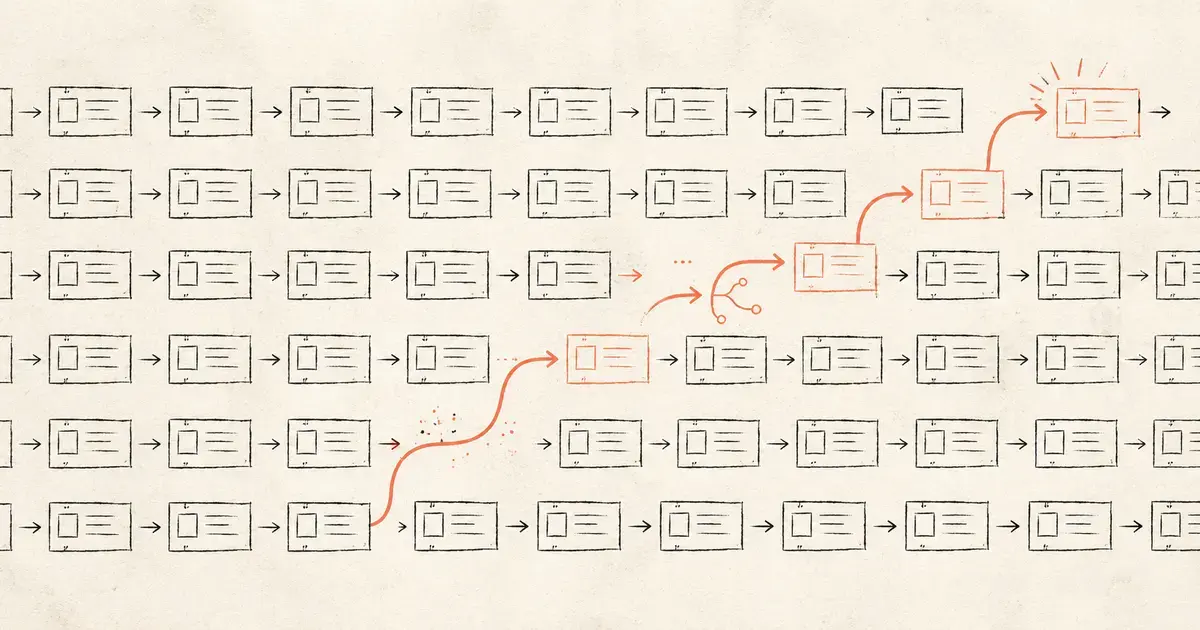
Autonomous systems interpret changing conditions, make decisions, and act with limited human direction. Learn how they work and where enterprises use them.
Quick Answer
Autonomous systems are physical or digital systems that can interpret changing conditions, make decisions, and carry out actions with limited ongoing human direction. An autonomous system may use artificial intelligence, machine learning, control logic, sensors, enterprise data, or a combination of technologies to determine what action to take. Unlike conventional automation, which follows predefined steps, autonomous systems can respond to changing inputs and select actions within defined objectives and operating boundaries.
Autonomous technology spans physical systems such as industrial equipment and vehicles as well as software-based systems that operate across applications, data sources, and business processes. The amount of independence varies: some systems recommend actions for human approval, while others can execute specific decisions on their own.
What are autonomous systems?
Autonomous systems are engineered systems designed to perform tasks and make decisions without requiring continuous human direction. Their defining characteristic is the ability to assess current conditions and determine an appropriate action instead of relying entirely on a fixed sequence of instructions.
The category includes both physical and computational systems. Autonomous products such as industrial equipment or vehicles may use sensors and control systems to respond to their surroundings. Software-based autonomous systems may use AI models, enterprise data, business rules, APIs, and connected applications to understand what is happening and decide what should happen next.
Not every autonomous system uses the same technologies, and autonomy does not mean complete independence from people. A system can operate autonomously within narrow boundaries while still escalating exceptions, requesting approval for higher-risk decisions, or allowing people to intervene.
In enterprise software, agentic AI applies many of these principles to AI agents that can pursue goals, use tools, and take action across connected systems.
How do autonomous systems work?
Autonomous systems typically operate through a repeating cycle: they receive information, interpret the situation, decide what action is appropriate, execute that action, and use the resulting feedback to determine what should happen next.
The specific technologies vary, but the operating pattern generally includes:
- Input or perception: The system gathers information about its environment or current state. Physical systems may use cameras, sensors, or telemetry. Digital systems may use databases, APIs, documents, application events, or user requests.
- Interpretation: The system evaluates those inputs and develops enough context to understand the current situation.
- Decision: Rules, models, planning logic, or other decision mechanisms determine an appropriate response within the system’s permitted boundaries.
- Execution: The system carries out an action, such as updating a record, calling an API, triggering a workflow, routing a case, changing an operating parameter, or requesting more information.
- Feedback: The outcome of that action becomes new information the system can use as conditions change.
For autonomous AI systems, these capabilities depend on the surrounding AI system architecture. A model cannot independently operate across an enterprise without reliable ways to access information, interact with applications, use tools, execute actions, and observe the results.
How are autonomous systems different from automation and AI agents?
Automation, autonomous systems, and AI agents can all perform work with reduced human involvement, but they differ in how they determine what to do. Traditional automation executes predefined logic, while an autonomous system can evaluate changing conditions and choose between permitted actions. An AI agent is a software component that can use AI to pursue an objective and may operate with different degrees of autonomy.
| Concept | How it operates |
| Traditional automation | Executes predefined rules or sequences when known conditions or triggers occur. |
| Autonomous system | Evaluates current conditions and selects actions within defined objectives and operating boundaries. |
| AI agent | Uses AI to reason about tasks, pursue objectives, and interact with tools or systems. Its independence depends on the authority it has been given. |
Traditional automation remains useful when a process is predictable and its decision logic can be specified in advance. Autonomous systems become more relevant when changing circumstances require the system to assess context before deciding what to do.
Autonomous agents are one software-based form of this capability. An AI agent may only gather information and make recommendations, or it may be allowed to execute actions independently. Agent autonomy describes how much decision-making and execution authority an agent receives.
Autonomy can also exist at the level of a wider system. In multi-agent systems, multiple specialized agents may exchange information, divide tasks, or coordinate actions while contributing to a larger objective.
What do autonomous systems need to operate reliably in an enterprise?
Enterprise autonomous systems need a controlled operating environment that determines what information they can access, which systems they can interact with, what actions they are allowed to take, and how their behavior is monitored. Reliability therefore depends on the surrounding data, architecture, permissions, governance, and operational controls as much as it depends on the autonomous technology itself.
Key requirements include:
- Reliable data and context: Decisions depend on the quality, availability, and relevance of the information the system receives.
- System integration: Autonomous systems may need to retrieve information and take action across existing applications, APIs, databases, and workflow platforms.
- Defined permissions: The system needs explicit boundaries around which data, tools, systems, and actions it can access.
- Human intervention: Human-in-the-loop controls can require approval for specific decisions, handle exceptions, or allow people to override system behavior.
- Monitoring and traceability: Enterprise AI monitoring helps organizations understand what a system did, what happened afterward, and whether its behavior remains within expected boundaries.
- Governance and accountability: AI agent governance establishes responsibility for approving permissions, setting operating limits, reviewing incidents, and determining where autonomous action is appropriate.
The importance of these controls generally increases with the consequence and reversibility of the actions a system is allowed to take. A system that retrieves information carries a different operational risk from one that can approve a transaction, modify production data, or initiate an external action.
Where are autonomous systems used in enterprises?
Autonomous systems are used where software or machines need to respond to changing conditions, make bounded decisions, and continue work without waiting for human direction at every step. Their applications range from physical equipment and robotics to AI-driven systems operating across enterprise workflows.
- In manufacturing, autonomous systems can monitor equipment or production conditions and adjust operations when circumstances change.
- In logistics and supply chain operations, they can evaluate inventory, routing, fulfillment conditions, or operational exceptions and initiate appropriate actions.
- In financial services, autonomous AI systems can gather information, investigate transactions, handle exceptions, and support operational decisions across connected systems.
- In insurance, they can collect claims information, validate documents, identify missing evidence, route cases, and initiate workflow actions based on policy or process conditions.
- In enterprise service operations, autonomous agents can retrieve information from different applications, resolve routine requests, initiate processes, or escalate situations that require human judgment.
Software engineering is another growing use case, with autonomous agents able to plan and execute bounded development tasks through connected tools.
Robotics and autonomous systems remain an important physical branch of the category. In enterprise technology, autonomous behavior is also increasingly appearing in software systems that operate across data, applications, workflows, and business processes.
Continue Exploring
Before increasing autonomy, enterprises need to know whether their data, architecture, integrations, governance, and operational controls can support systems that act independently in production.
Explore how Fulcrum Digital approaches enterprise AI readiness and governed AI deployment.
Related Reading
Autonomous AI Systems: Architecture, Risks, and Opportunities
A deeper look at the architecture and operational controls behind production autonomous AI. The article examines what changes when AI systems move beyond generating outputs and begin taking actions across enterprise systems, including the role of execution layers, observability, orchestration, and safeguards.
Autonomous AI Has Made Accountability Impossible to Avoid
The article explores ownership and accountability when AI systems are permitted to make consequential decisions without continuous human review. It extends the governance questions introduced here by looking at who remains responsible for autonomous decisions, how authority should be assigned, and what organizations need to be able to trace after an action has been taken.
Related Questions
Are all autonomous systems powered by AI?
No. Autonomous systems can use AI, but AI is not a requirement for every autonomous system. Some rely on control systems, sensors, predefined decision logic, or other technologies to respond to changing conditions without continuous human direction. AI becomes particularly useful when the system needs to interpret complex information, reason across multiple inputs, or make decisions that cannot be fully specified in advance.
Can autonomous systems operate with human oversight?
Yes. An autonomous system can operate independently within defined limits while still allowing people to approve certain actions, handle exceptions, or intervene when necessary. Human-in-the-loop controls are especially useful when decisions carry greater operational, financial, regulatory, or customer consequences.
Can autonomous systems work with legacy enterprise systems?
Yes, provided they have reliable ways to access the data and functions those systems expose. APIs, integration layers, middleware, and other interfaces can allow autonomous systems to retrieve information or trigger actions without requiring the underlying legacy system to be replaced first. The quality and limitations of those integrations will affect what the autonomous system can safely do.
How are autonomous systems tested before production?
Autonomous systems should be tested against both expected workflows and situations where inputs, system conditions, or outcomes differ from the norm. Testing should examine decision behavior, permissions, integrations, failure handling, escalation paths, and whether the system remains within its defined operating boundaries before it is given production authority.
Who is accountable for decisions made by an autonomous system?
Accountability remains with the organization and the people responsible for deploying, governing, and overseeing the system. AI agent governance can define who approves autonomous behavior, who owns specific risks and decisions, when human review is required, and how actions are recorded so they can be investigated when necessary.