




THE ADLC SUPER AGENT

One super agent for the full development lifecycle.

The ADLC Super Agent is an AI-powered development lifecycle system built on FD RYZE® Infinity. It is designed to carry software work from the first business idea to running, governed software, using specialist agents that move the work through requirements, architecture, build, validation, security, compliance, and documentation. 

For enterprise teams, the value is not just faster coding but a more connected development lifecycle where decisions, handoffs, reviews, and evidence do not get lost between stages. The ADLC Super Agent helps teams move software forward with clearer context, stronger checks, and governance built into the way the work progresses. 

Eleven specialists.
One coordinated lifecycle.

Designed For Banks, Payment Providers, And Financial Platforms

The ADLC Super Agent is made up of eleven specialist agents, each purpose-built for a defined stage of the development lifecycle. Every agent runs inside your network, works within its assigned scope, and follows the same governance model, so the lifecycle can move forward without turning into a loose collection of disconnected AI tools. 


Each specialist also carries a small team of narrowly scoped sub-agents for the work beneath its role. Enterprises can put the full agent team to work across the lifecycle or begin with the few agents that address their biggest delivery constraint first. 

The agent fabric is also designed to expand, with additional specialist agents being developed as the ADLC Super Agent continues to cover more of the enterprise delivery lifecycle. 

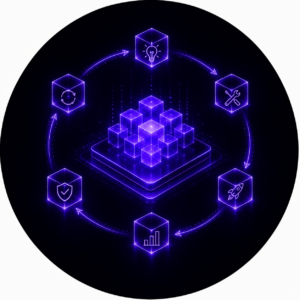
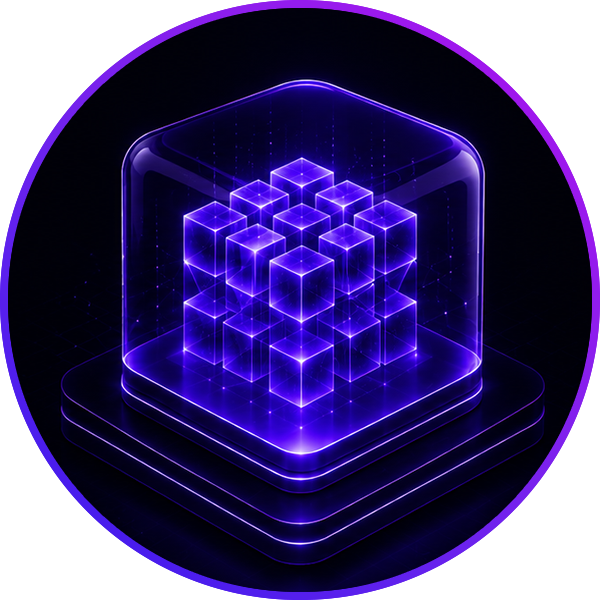
Glowing purple cube platform surrounded by a continuous lifecycle of interconnected AI capability icons representing enterprise AI operations and deployment.

Built on the platform. Ready for the lifecycle.

The ADLC Super Agent sits on the same six-layer FD RYZE® Infinity foundation that powers FD RYZE® Nexus and DocIntel. Governance, security, model routing, monitoring, and cost control are part of the platform architecture. 

Business Analyst

Messy inputs become validated stories. 

Business Analyst is the entry point for the ADLC Super Agent. It reads business requirements in multiple formats and turns them into a complete, validated backlog with epics, stories, acceptance criteria, non-functional requirements, risks, dependencies, and domain language that downstream agents can use without rebuilding the requirement from scratch. 

Glassmorphism system architect icon featuring a network architecture diagram and user silhouette in translucent purple with cyan structural accents.

System Architect

Trade-offs become decisions, not debates. 

System Architect takes the validated stories and turns them into a target architecture the next agents can build from. It evaluates real options for major design choices, weighs cost, complexity, and performance, then records the selected path in ADRs so the decision can be reviewed later without being reopened from scratch. 

UI / UX Designer

Design starts with usable structure. 

UI / UX Designer reads the stories and data produced earlier in the lifecycle, then turns them into wireframes, flows, and component specifications that designers can refine instead of starting from a blank page. The output is structured for accessibility, responsiveness, and front-end extension. 

Glassmorphism full-stack developer icon featuring a code editor, developer profile, and programming symbols in translucent purple with cyan and magenta code accents.

Full-Stack Coder

Code that fits the system it enters. 

Full-Stack Coder is built to write code that can enter an enterprise codebase without creating avoidable cleanup. It studies conventions, implements the required contract, validates the result, and flags new dependencies for human approval before they become part of the build. 

Code Reviewer

Findings arrive with fixes. 

Code Reviewer turns static analysis into concrete action. It identifies quality and security issues, classifies findings with CWE IDs and CVSS scores, and creates fix PRs for Critical and High risks instead of leaving teams with a report to interpret. 

Glassmorphism test engineer icon featuring a software dashboard with analytics, validation checklist, and automation gear in translucent purple with cyan and magenta accents.

Test Engineer

Quality is checked before release. 

Test Engineer turns each story into testable proof. It creates runnable test coverage across pytest, Jest, and Playwright, grades coverage quality, and supports the migration of legacy Selenium suites into the ADLC testing flow. 

People approve where judgment matters.

Human checkpoints are configurable by customer and environment. Teams decide where approval is required, and the ADLC Super Agent stops there every time, placing people at the decisions that deserve human judgment. 

DevOps / SRE

Deployment moves with a risk signal. 

DevOps / SRE generates the build and release pipelines, produces Terraform infrastructure, and scores release risk before deployment. It gives teams the infrastructure, automation, and deployment signal needed to decide whether a release should proceed, slow down, or stop. 

Glassmorphism AI Security Engineer icon featuring a user profile, security shield with padlock, and protected server stack in purple and magenta.

Security Engineer

Production gets a cleaner security pass. 

Security Engineer brings security review into the ADLC flow before software reaches production. It gives teams an earlier view of potential exposure by mapping the threat model and checking the code for issues that should be resolved before release. 

Compliance Auditor

Regulatory checks come with proof. 

Compliance Auditor reviews the work produced across the ADLC lifecycle against major regulatory and control frameworks. It scans stories, code, and infrastructure, then returns a clear PASS, FAIL, or WARNING result with evidence, so teams can see where compliance concerns exist before the work moves forward. 

Glassmorphism AI QA and Performance icon featuring a user profile, performance dashboard, speedometer, analytics bars, and validation badge in translucent purple with orange and cyan accents.

QA / Performance

Reliability is tested before release. 

Security Engineer brings security review into the ADLC flow before software reaches production. It gives teams an earlier view of potential exposure by mapping the threat model and checking the code for issues that should be resolved before release. 

Technical Writer

Release knowledge stays in step. 

Technical Writer brings documentation into the ADLC flow instead of leaving it as a late-stage cleanup task. It creates the core technical documents teams need to understand, operate, and track the software, while identifying docs that no longer match the code. 

Fulcrum Digital logo

One connected flow, end to end. 


The ADLC Super Agent runs on FD RYZE® Infinity to keep the lifecycle connected across requirements, decisions, code, review, testing, security, compliance, and documentation. Each step hands clean, checked work to the next, with shared memory, scoped access, hard quality gates, and in-perimeter execution. 

Experience Ryze Infinity

Where software delivery loses momentum

A delivery lifecycle can look structured on paper and still behave unpredictably in motion. Teams may have the right roles, the right tools, and the right ceremonies, but the transfer of context between stages often determines whether work moves cleanly or comes back for another pass. 

Unclear Requirements

Work often begins from a brief that sounds complete until teams try to build from it. Missing edge cases, undefined acceptance criteria, unclear NFRs, and unresolved dependencies surface later, when the cost of clarification is higher and rework has already entered the sprint.

Decisions in a Queue

Architecture, design, data, and integration choices often wait for a small group of people with the authority to decide. While those decisions sit unresolved, downstream teams either pause or move ahead on assumptions that may have to be corrected later.

Reviews Back Up

Finished work can still sit idle when code review, testing, security, or approval capacity is limited. The longer review queues grow, the more context fades, defects become harder to resolve, and release confidence depends on rushed checks near the end.

Late Compliance

Security and audit checks create the most friction when they arrive after the architecture and code are already in place. At that stage, fixing gaps can mean redesign, rework, delayed release, or accepting risk that should have been visible earlier.

The development lifecycle needs a system, not another slice.


Point tools can help with pieces of the work. The ADLC Super Agent is built around the full product development lifecycle, with role agents, governed access, hard gates, audit trails, and DORA-linked outcomes operating as one coordinated system. 

Platform-grade foundations 

The ADLC Super Agent runs on a six-layer FD RYZE® Infinity architecture with governance, autonomy loops, model routing, security, observability, and cost controls built into the foundation. It is not a thin wrapper over a model but a lifecycle system built on enterprise platform architecture. 

Full PDLC coverage 

Eleven role agents, supported by specialty agents, cover the product development lifecycle across requirements, architecture, design, code, review, testing, DevOps, security, compliance, performance, and documentation. Teams can run the full chain or activate the subset that solves the current constraint. 

Programmatic gates before every handoff 

Each specialist agent checks its output before the next agent can use it. A hard, reproducible quality gate sits at every handoff, so weak work is corrected, retried, or flagged before it moves forward. The chain advances only when the artifact is strong enough for the next stage. 

Inside the perimeter. Measured from day one. 

The ADLC Super Agent keeps data inside the customer environment, with every agent action logged and audited. DORA metrics begin from day one, and ROI levers are tracked explicitly, giving teams a measurable operating view instead of a promise of future value. 
Start with one program. Scale with proof.

The next phase depends on what the roadmap reveals about readiness, governance, operational gaps, and deployment sequencing. 

Day 90: Prove It 

Start with one program and prove the ADLC Super Agent on real work. The first phase focuses on getting selected agents into production, capturing a DORA baseline, and showing the first visible trend from your own delivery environment. 
Day 180: Widen It 

Once the pilot has proof, the ADLC Super Agent expands across the chain. The second phase activates the full lifecycle on one program, ties compliance to the audit framework, and brings a second team into the operating model. 
Day 365: Embed It 

By the end of the first year, the ADLC Super Agent becomes part of how software work moves. The focus shifts to broader adoption, codified gates and policies, and a repeatable model that can become the default for enterprise delivery. 
Frequently Asked Questions

1. What is the ADLC Super Agent?

The ADLC Super Agent is Fulcrum Digitals AI-powered development lifecycle system. It helps enterprise teams move software work from business intent to running, governed software by coordinating the work across requirements, architecture, design, build, review, testing, deployment, security, compliance, performance, and documentation. 

2. What problem does the ADLC Super Agent solve?

The ADLC Super Agent addresses the delays that happen between stages of software delivery. Requirements lose clarity, decisions wait, reviews pile up, and compliance checks often arrive late. The agent is designed to keep the work connected as it moves through the lifecycle, so context and accountability do not keep breaking between steps. 

3. How is the ADLC Super Agent different from a coding assistant?

A coding assistant usually helps one person complete one task faster. The ADLC Super Agent is built for the full development lifecycle. It connects specialist agents, shared context, quality gates, and handoffs so the work can move across stages rather than improving only one isolated activity. 

4. How does the ADLC Super Agent fit with FD RYZE® Infinity?

The ADLC Super Agent is built on the FD RYZE® Infinity enterprise platform. That is where the orchestration, model routing, shared memory, monitoring, cost controls, security, and governance capabilities sit. The Super Agent uses those platform capabilities to run the development lifecycle through specialist agents. 

5. How does the ADLC Super Agent protect code and delivery data?

The ADLC Super Agent is designed to run inside the customer perimeter. The agents work through scoped access within the customer environment, with activity recorded for review. The model is built for enterprises that need control over where code, data, credentials, and delivery context live. 

6. How does governance work in the ADLC Super Agent?

Governance is built into the way work moves through ADLC. Each stage produces artifacts, decision records, quality results, and trace links that can be reviewed later. This gives teams a clearer record of what was generated, checked, approved, changed, or handed forward. 

7. Where do humans stay involved in the ADLC process?

Human checkpoints can be configured where judgment, review, or approval is required. ADLC can move work through specialist agents, but it does not remove the people responsible for important decisions. Teams decide where the system stops for review before work continues. 

8. How can an enterprise start using the ADLC Super Agent?

A practical starting point is a pilot on one program or requirement. The first phase can focus on selected agents, such as Business Analyst, Test Engineer, or Code Reviewer, while capturing a DORA baseline and early delivery signals. From there, adoption can widen across more teams and more stages of the lifecycle. 

Engineering That Meets the Moment

When timing matters, so does the partner you build with.

Send Us A Message

Thank you, we'll be in touch shortly.

Need More Info?

Message us & we will get back to you ASAP! 

Schedule Appointment

Fill out the form below, and we will be in touch shortly.