






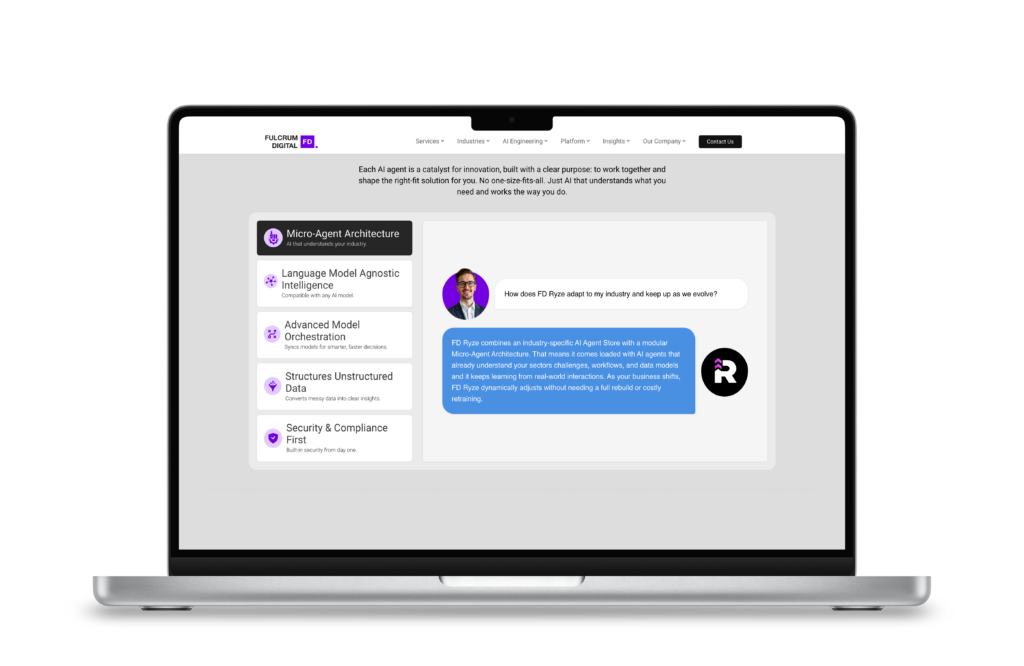
Built on FD RYZE® Infinity, Nexus connects to enterprise documents and returns grounded, traceable answers in seconds. Benchmarked at 89–92% accuracy and live in 48 hours. The pressure to show AI progress is high, but the first build decision matters. Start with Use Case Prioritization to identify the few opportunities worth moving first.
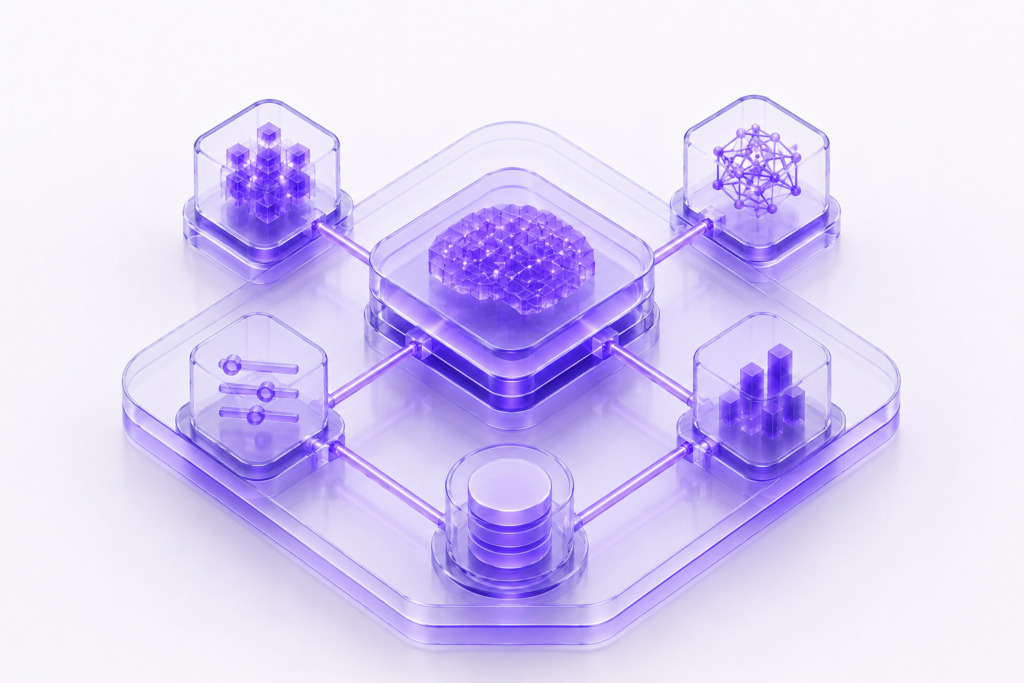
Multi-agent systems need defined topology, data access patterns, orchestration logic, and integration boundaries before engineering starts. Agentic System Design turns the idea into a buildable architecture.
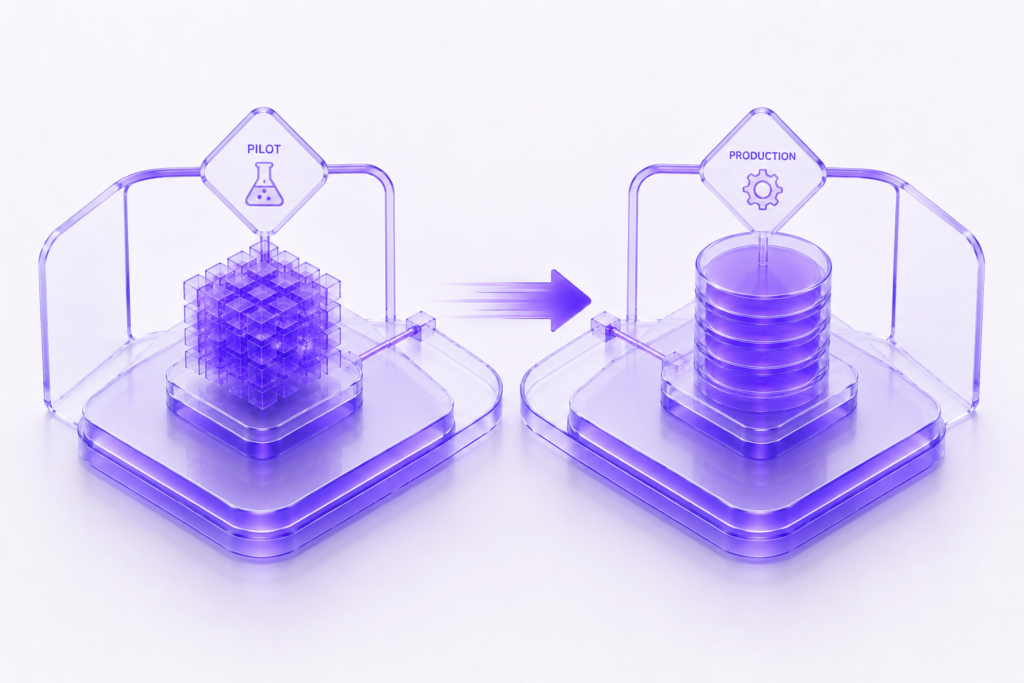
Pilot success can stall when real data, users, integrations, cost, and governance enter the picture. Pilot to Production identifies the blocker before the pilot window closes.
A technically successful deployment does not guarantee product adoption. Change & Adoption helps define role impact, usage KPIs, communication needs, and the behaviors that turn a live agent into business value.
Agentic systems need clear oversight, approval points, traceability, and compliance-aware design before they move deeper into workflows. Advisory helps surface these requirements early, while architecture and adoption decisions are still being shaped.
Use Case Prioritization maps AI opportunities against process maturity, data readiness, business value, and build complexity before investment decisions are made.

Agentic Advisory helps organizations decide what should be built and how deployment should be structured. FD RYZE® Infinity provides the platform layer those decisions ultimately run on.
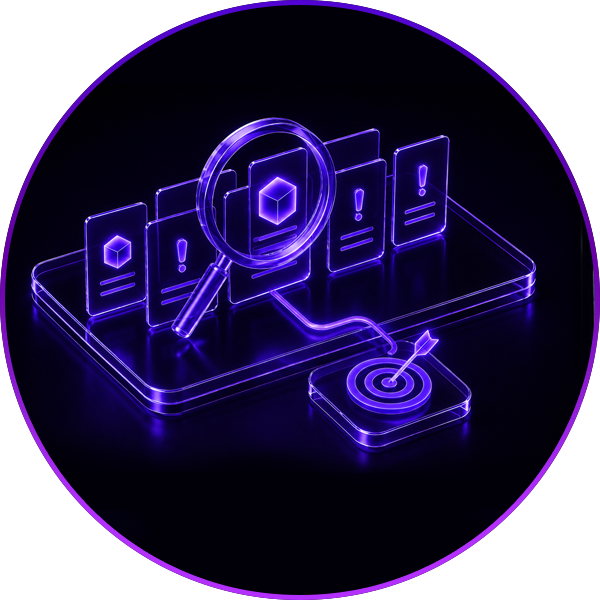
The prioritization phase reduces the noise surrounding enterprise AI planning. Teams leave with clearer sequencing, stronger visibility into dependencies, and a more realistic understanding of which initiatives are prepared for engineering attention versus which ones still require foundational work first.
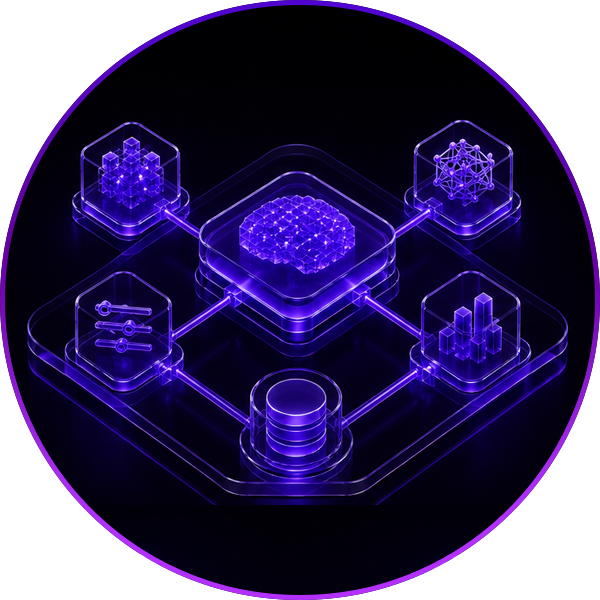
The architecture phase gives engineering teams a clearer operational structure before development accelerates. Data interaction patterns, agent relationships, governance checkpoints, and deployment assumptions are defined earlier, reducing redesign pressure later in the engineering lifecycle.
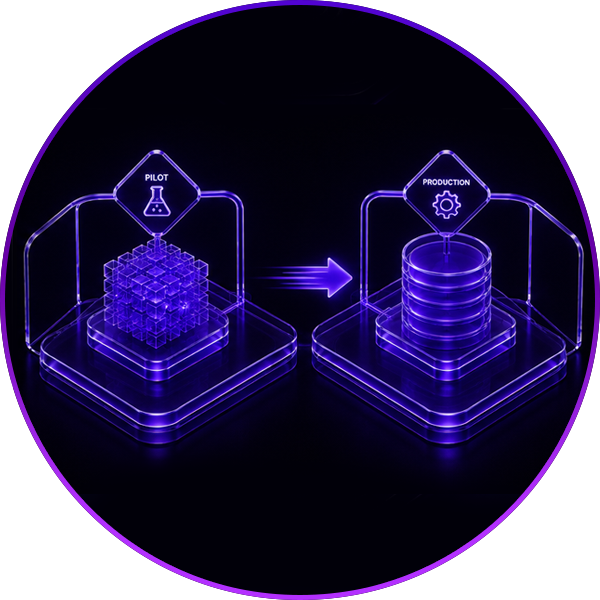
This phase brings production realities into the conversation earlier, while teams still have room to respond. Infrastructure readiness, governance expectations, integration strain, operational oversight, and deployment cost pressures become visible before the system moves into broader enterprise conditions.

The adoption phase helps organizations operationalize AI beyond deployment status alone. Teams gain clearer visibility into role impact, communication needs, oversight expectations, and the behavioral patterns that influence whether a system becomes part of day-to-day operations or remains underused after launch.