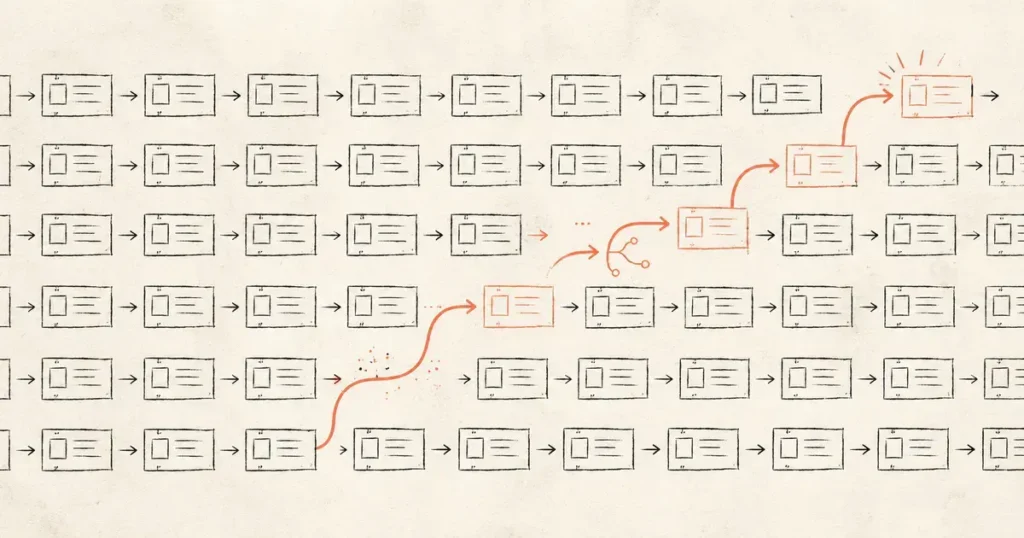

Only 10% of property and casualty insurers have successfully scaled AI, according to Capgemini’s World Property & Casualty Insurance Report 2026. In a separate 2026 survey by Verisk and Reuters, 70% of respondents said their AI underwriting use cases were in full production. The figures measure different stages of maturity: one looks at AI scaling across the insurer, while the other captures individual underwriting deployments. Together, they show much distance still remains between putting a use case into production and building a repeatable operating capability.
For a Chief Underwriting Officer, that gap should shape the next budget cycle. When submission data is inconsistent and ownership remains unclear, more spending on models may buy little beyond an impressive pilot. The harder scaling problem sits in underwriting data readiness and in the operating model around the technology.
Why production numbers outpace scaled adoption
The Verisk and Reuters survey, published February 2026, found a strong majority of insurance respondents reporting AI underwriting use cases in full production, with measurable gains and particularly high adoption among reinsurers and brokers. Three months later, Capgemini’s 19th World P&C report, based on 344 senior executives, 809 insurance employees, and 1,113 policyholders, found that just one in ten P&C insurers had successfully scaled AI.
The findings describe different levels of maturity across the industry. An underwriting model can be live within one line of business while still relying on manual intake, local integrations, or project-specific controls.
That gap is harder to see when success is not measured consistently. Capgemini found that 42% of insurers track no AI metrics at all. without an agreed baseline and measures of adoptions, a production deployment may prove that the technology works while leaving its operational impact and return unclear. We noted the early shape of this gap in our earlier look at underwriting automation; the 2026 findings show how widely it still persists.
Data readiness becomes the scaling constraint
What it is: Data readiness in underwriting means submissions, exposure, claims, and third-party data arrive structured, complete, and consistent enough for a model to use without human re-keying. In many carriers, submission data still sits in broker emails and PDFs, exposure data remains split across lines of business, and claims history moves out of core systems through overnight batch exports.
Why it matters: When that information is incomplete or inconsistent, underwriters re-check the output and the expected cycle-time gain begins to disappear. Verisk and Reuters respondents cited data privacy and security as the top concern, followed by accuracy, reliability, and explainability, with legacy integration remaining a recurring infrastructure obstacle. These issues extend beyond model selection into the data and architecture supporting the underwriting process, as discussed in our work on migrating legacy insurance systems without disruption.
How it shows up: A common warning sign is strong model performance in testing followed by weak adoption on the underwriting desk. Underwriters work around tools that add review steps or make the decision harder to complete. Capgemini found that nearly half of employees with access to AI tools said their workday was unchanged after 18 months, suggesting that the technology had not altered the underlying work enough to deliver a meaningful improvement.
The AI investment mismatch
Capgemini puts a number on the spending imbalance: 72% of AI investment goes to technology and infrastructure, while only 28% goes to change management. the result can be a capability the organization struggles to absorb, even when the technology performs as intended.
Ownership compounds the problem. Fifty-five percent of P&C insurers reported no clear ROI from AI initiatives, and the same share said responsibility for those initiatives was unclear. Two-thirds also reported a shortage of AI skills. Without clear ownership and agreed measures, adoption becomes difficult to manage, and an underwriting AI program can remain live without becoming part of everyday underwriting.
The operating model behind scale AI
Capgemini refers to the insurers that have scaled AI successfully as “intelligence trailblazers.” Over three years, they recorded up to 21% higher revenue growth and roughly 51% greater share-price growth than peers. The report also identifies several operating habits that distinguish them:
-
They are nearly four times more likely to invest in change management beyond basic training.
-
They are nearly three times more likely to run explainable AI infrastructure across the organization rather than building it separately for each project. The governance requirements behind explainable AI in insurance are covered in our piece on AI governance frameworks for enterprise-scale agentic systems.
-
They are almost twice as likely to include AI governance frameworks for enterprise-scale agentic systems.
-
They track adoption and business outcomes closely enough to show whether a deployment is changing the work.
-
The pattern extends beyond model performance. These insurers treat ownership, explainability, and adoption as part of the operating model rather than as tasks to address after deployment.
The pattern extends beyond model performance. These insurers treat ownership, explainability, and adoption as part of the operating model rather than as tasks to address after deployment.
Scaling AI underwriting beyond the pilot
Underwriting leaders can reduce the risk of another isolated deployment by sequencing the work around a measurable decision rather than a broad technology rollout.
-
Baseline the current process: Record quote turnaround, hit ratio, referral rates, and re-keying time before deployment. Without a clear starting point, any claim of improvement will remain difficult to prove.
-
Fix submission data before model selection: Structured intake and document intelligence can remove manual re-keying and improve the quality of the information available to later models.
-
Choose one underwriting decision: Triage by risk appetite is one example. A narrow, end-to-end decision creates a clearer test than a department-wide rollout, with a named underwriter retaining override authority. The same principle appears in our work common myths about agentic AI in insurance claims.
-
Build explainability into the system: Every automated recommendation should carry the reasoning and evidence needed by underwriters, regulators, and brokers. Retrofitting this layer after deployment usually creates more rework.
-
Assign ownership in writing: A named executive should own the business metric while AI responsibilities should appear in the roles of the teams expected to use and maintain the system.
Decision rights deserve the same attention. Insurity’s April 2026 survey found that consumer support for AI among P&C policyholders rose from 20% to 39% year over year. However, only 22% were comfortable with AI filing a claim on their behalf, and 16% with AI canceling or renewing a policy on its own. Those results supported an assisted model for higher-impact decisions, with human review retained where customer or regulatory exposure is greater.
From pilot to underwriting capability
A scaled AI underwriting operation should show up in the work itself: faster quote turnaround, fewer avoidable referrals, explainable recommendations available when needed, and business results that finance can validate. Reaching that point depends on the data entering the process, the controls around each decision, and whether underwriters can use the system without adding another layer of review.
Fulcrum Digital approaches underwriting AI as an insurance engineering foundation built inside the insurer’s environment. That foundation brings together structured submission intake, explainable decision support, governance, and monitoring, while remaining flexible enough to adapt as models and underwriting requirements change. The goal is a capability the carrier can own, trust, and extend beyond a single deployment.
For underwriting leaders deciding which pilot is ready to become part of the operating model, the conversation begins with the data.
Speak with a Fulcrum Digital executive.
Key Takeaways
-
Verisk and Reuters found that 70% of respondents had AI underwriting use cases in production, while Capgemini found that only 10% of P&C insurers had scaled AI successfully. The figures reflect different stages of maturity and show how far a live deployment can remain from repeatable enterprise capability.
-
Capgemini found that 42% of insurers track no AI metrics. Without a clear baseline, a production deployment may prove technical viability while leaving its effect on underwriting performance and ROI uncertain.
-
Submission data remains a major scaling constraint. Broker emails, PDFs, fragmented exposure records, and overnight core-system exports can preserve the manual work that AI underwriting was intended to reduce.
-
P&C insurers direct 72% of AI investment toward technology and infrastructure and only 28% toward change management. Fifty-five percent also report unclear ownership, making adoption and accountability harder to manage.
-
Insurers that scale AI most successfully invest more heavily in change management, shared explainability infrastructure, defined employee responsibilities, and business-outcome measurement.
Frequently Asked Questions
What is AI underwriting in P&C insurance?
AI in insurance underwriting uses machine learning, document intelligence, and automation support risk assessment, submission triage, pricing, and referral decisions. Most insurers apply it to defined parts of the underwriting process, while human underwriters retain authority over higher-risk or exceptional cases.
What is the difference between AI underwriting in production and AI underwriting at scale?
An AI underwriting use case may be considered in production when it is live within one team, product line, or decision process. Scaled AI operates across a broader part of the business with consistent data, shared controls, clear ownership, measurable adoption, and repeatable results. This distinction helps explain why 70% of respondents reported underwriting AI in production while Capgemini found that only 10% of P&C insurers had scaled AI successfully.
Why do AI underwriting programs struggle to scale?
Common scaling barriers include poor submission-data quality, fragmented systems, unclear ownership, weak measurement, and limited investment in adoption. A model may perform well in testing but add little value if underwriters still have to re-key information, verify every output, or work around disconnected tools.
What is underwriting data readiness?
Underwriting data readiness means that submission, exposure, claims, and approved third-party data are complete, consistent, accessible, and structured well enough to support underwriting decisions. Broker emails, PDFs, line-of-business silos, and overnight system exports often create the manual work that slows AI adoption.
How should insurers measure ROI from AI underwriting?
Insurers should establish a baseline before deployment and track measures tied to the underwriting decision being improved. Relevant metrics may include quote turnaround time, re-keying effort, referral rates, hit ratio, submission-processing capacity, adoption, and override frequency. Clear ownership is also needed so one team remains accountable for the result.
Should AI underwriting decisions be fully autonomous?
Full autonomy may be suitable only for narrowly defined, lower-risk decisions with reliable data and clear controls. Insurance AI governance should define which decisions may proceed automatically, which require human review, and how overrides are recorded. Higher-impact underwriting decisions should retain human review, documented reasoning, and an override path. The level of automation should reflect the financial, regulatory, and customer consequences of an incorrect decision.