Quick Answer
Digital transformation in consumer goods (CPG) is the coordinated use of digital systems, connected data, automation, and AI to improve how consumer goods companies develop products, source materials, run operations, manage supply chains, sell through channels, and respond to consumers.
It can involve modernizing individual workflows or connecting several parts of the business so information and decisions move more reliably across the value chain. The priorities depend on where technology, data, or manual processes are creating the greatest operational or commercial friction.
What are the key areas of digital transformation in CPG?
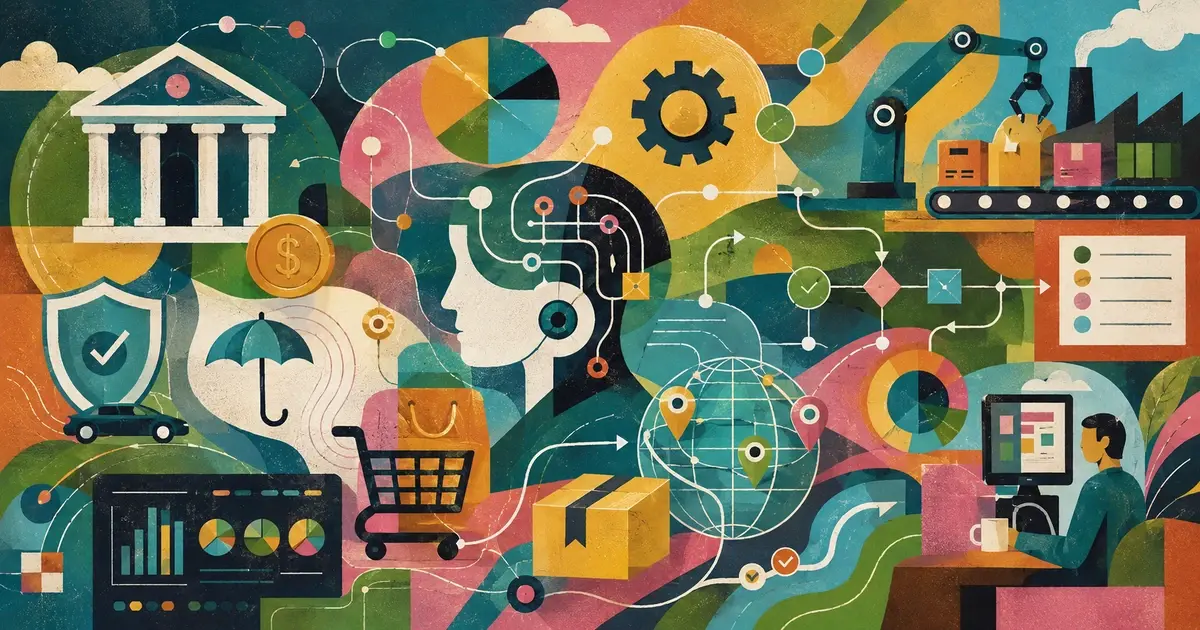
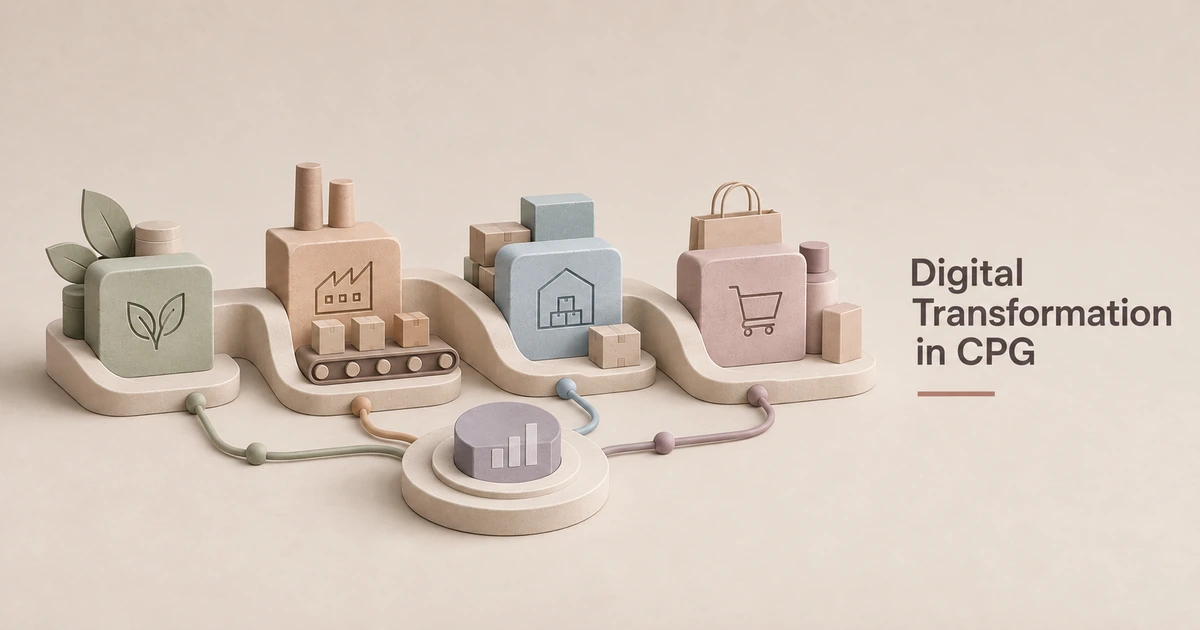
In practice, digital transformation in consumer goods industry operations can reach several parts of the business because products move through a long chain of decisions before reaching the consumer.
Common areas include:
- Product and innovation: Using connected product, market, and consumer data to support product development, portfolio decisions, and faster access to reliable information.
- Manufacturing and operations: Improving production visibility, quality, planning, maintenance, and the flow of information across operational systems.
- Supply chain and inventory: Connecting forecasting, planning, inventory, logistics, and fulfillment so companies can respond more effectively as demand and supply conditions change. Broader supply chain transformation can span many of these functions, while an inventory optimization agent can support specific inventory and replenishment decisions.
- Procurement and suppliers: Modernizing sourcing, supplier information, purchasing workflows, spend visibility, approvals, and procure-to-pay processes.
- Commercial and consumer channels: Using data across retail, ecommerce, merchandising, marketing, and customer interactions to understand performance and respond to changing consumer behavior.
These areas are closely connected. A change in consumer demand can affect production plans, inventory requirements, supplier purchases, and channel availability, which makes reliable data and integration important across the wider transformation.
Why is digital transformation important for CPG companies?
Consumer goods companies operate in an environment where demand, input costs, product portfolios, retailer requirements, channel performance, and consumer expectations can change quickly. When information is fragmented across teams and systems, responding to those changes becomes slower and more difficult.
Digital transformation can improve how CPG companies see what is happening across the business and coordinate the decisions that follow. Better demand information can support planning and inventory decisions. More connected procurement data can improve visibility into suppliers and spending. Digital operations can reduce repetitive manual work, while better commercial and consumer data can help teams understand which products, channels, and activities are performing.
The value therefore depends on the problem being addressed. A supply chain program may focus on availability or working capital, while a procurement initiative may target cycle time, sourcing visibility, or manual effort. The technology matters when it improves an outcome the business already needs to manage.
What is CPG procurement digital transformation?
CPG procurement digital transformation applies digital systems, data, analytics, and automation to how consumer goods companies source materials and services, manage suppliers, make purchasing decisions, and move work through procure-to-pay processes.
For a CPG company, procurement can involve ingredients, packaging, raw materials, indirect goods and services, and large supplier networks. Digital transformation can help connect supplier information, spend data, contracts, purchase orders, approvals, and downstream financial processes so procurement teams have a clearer view of what is being purchased and where attention is required.
Intelligent automation can reduce manual work in repeatable procurement processes such as document handling, validation, routing, approvals, and exception management. Analytics and AI can also support supplier assessment, spend analysis, demand planning, and other decisions where teams need to evaluate larger volumes of information.
CPG procurement digitization is one part of this wider change. Converting paper documents, spreadsheets, approvals, or isolated purchasing steps into digital workflows can remove individual manual tasks. Procurement digital transformation connects those improvements across the data, systems, workflows, and decisions involved in the wider procurement function.
How are AI and automation changing digital transformation in CPG?
AI and automation give CPG companies additional ways to interpret operational and market data, support decisions, and reduce manual work across high-volume processes.
Predictive models can support demand forecasting and inventory planning. AI can help analyze supplier or spend information, identify patterns in consumer and product data, classify documents, and surface unusual conditions that need attention. Automation can move information between systems and carry out predictable workflow steps, while AI agents can support decisions or execute permitted actions when the next step depends on changing context.
These capabilities can operate within wider AI & automation environments that connect models, business rules, workflows, enterprise applications, and human review. The appropriate level of automation depends on the decision being made. Routine actions may be suitable for automated execution, while decisions involving larger financial commitments, supplier risk, or significant operational consequences may still require approval.
The practical shift is toward connecting AI to the workflows where decisions are made rather than leaving insights inside standalone tools or reports.
What are the biggest challenges in CPG digital transformation?
Many CPG transformation programs run into problems when the systems and information required for a new capability are fragmented across functions. Supplier data may sit in one platform, inventory in another, product information somewhere else, and commercial data in separate retail or ecommerce environments.
Data readiness becomes important because analytics, automation, and AI depend on information being accessible, reliable, sufficiently current, and connected to the process that needs it. Weak integrations can create similar problems when data cannot move reliably between existing applications and newer digital capabilities.
Transformation can also stall when processes vary significantly across teams, ownership is unclear, or new technology is introduced without agreement on how people will use it in daily operations. Pilots may work in controlled conditions and still struggle when they encounter real exceptions, system dependencies, or operating constraints.
A practical approach is to start with the business problem, identify the data and systems it depends on, and address the barriers that prevent that use case from working reliably. This allows transformation to progress in useful increments instead of requiring every part of the enterprise environment to change at once.
Continue Exploring
CPG transformation becomes easier to prioritize when each initiative is tied to a specific operating problem, whether the priority sits in procurement, inventory, production, supply chain, or commercial execution.
Fulcrum Digital helps organizations assess the data, systems, workflows, and AI opportunities behind those priorities and define a practical path toward measurable improvement.
CTA: Book a conversation
Related Reading
How Enterprise Agentic AI Is Reshaping Operations Across Retail, Manufacturing, and Logistics
Forecasting, inventory, and fulfillment increasingly depend on connected decisions across retail, manufacturing, and logistics. This article looks at how agentic AI is entering those operations and what changes when AI moves from analysis into operational workflows.
Related Questions
What is the difference between CPG and FMCG?
CPG stands for consumer packaged goods, while FMCG stands for fast-moving consumer goods. The terms are often used interchangeably, but FMCG generally refers to the faster-turnover portion of the consumer goods market, including frequently purchased products such as food, beverages, toiletries, and household essentials. CPG is commonly used in North America, while FMCG is more common in many international markets.
Is CPG digital transformation the same as retail digital transformation?
No. CPG digital transformation primarily concerns the companies that develop, manufacture, market, and distribute consumer products. Retail digital transformation focuses on the businesses that sell those products to consumers through stores, ecommerce sites, marketplaces, and other channels. The two increasingly overlap around areas such as demand data, inventory availability, ecommerce, merchandising, promotions, and consumer insights.
Is procurement transformation the same as supply chain transformation?
No. Procurement is one part of the wider supply chain. It focuses on sourcing, suppliers, purchasing, contracts, spend, and the processes used to acquire goods and services. Supply chain transformation has a broader scope that can also include demand planning, manufacturing coordination, inventory, warehousing, logistics, distribution, and fulfillment. Changes in procurement can therefore contribute to a larger supply chain transformation program.
Does digital transformation require replacing legacy ERP systems?
No. CPG companies can modernize processes around existing ERP and core systems through APIs, integration layers, data platforms, workflow automation, and targeted application changes. System replacement may be appropriate when an existing platform creates unacceptable limitations or risk, but it is not a prerequisite for every transformation initiative. The decision should depend on what the business needs to improve and whether the current environment can support it reliably.