
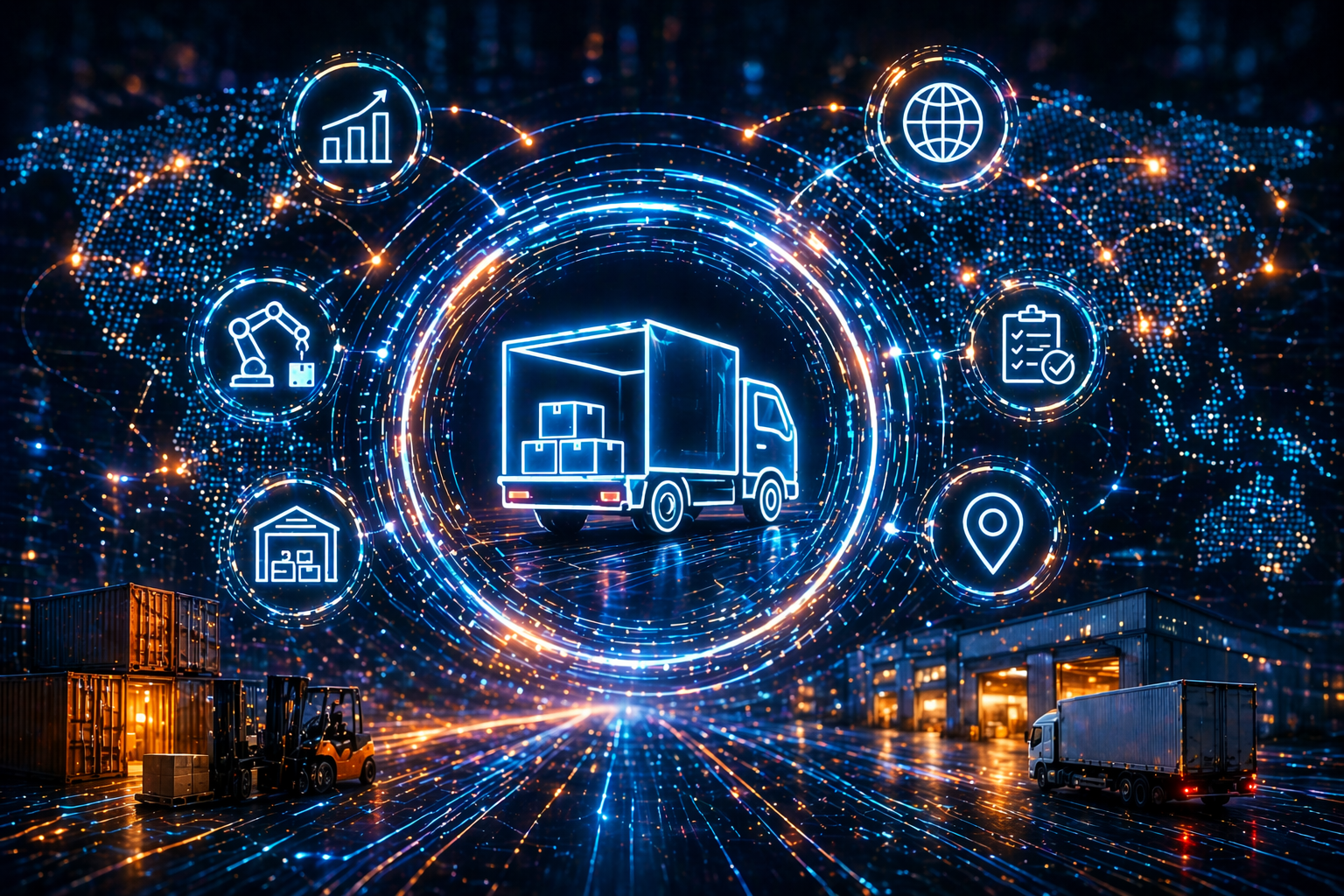
Supply chain transformation refers to redesigning supply chain operations using modern technologies, data, and automation to improve speed, visibility, resilience, and cost control. It goes beyond incremental upgrades and involves rethinking how goods, information, and decisions move across the network, from suppliers and warehouses to distribution and delivery.
In today’s environment, digital supply chain initiatives are increasingly driven by AI, advanced analytics, and connected systems that enable real-time coordination. The goal is not just efficiency but a more responsive, intelligent supply chain that can adapt to demand shifts, disruptions, and operational complexity without constant manual intervention.
What does supply chain transformation typically involve?
Supply chain transformation means replacing fragmented, reactive processes with connected, data-driven operations. This includes upgrading legacy systems, integrating data across functions, and introducing tools that support supply chain analytics, automation, and real-time decision-making. It often touches planning, procurement, inventory, warehousing, transportation, and last-mile delivery.
A transformed supply chain is not defined by a single technology but by how well systems, data, and workflows work together to support faster, more accurate decisions across the entire network.
How is digital supply chain different from traditional supply chain models?
Traditional supply chains often operate in silos, with limited visibility across functions and delayed information flow. Decisions are typically based on historical data, manual reporting, and periodic updates.
A digital supply chain changes that by connecting systems, data streams, and processes into a more unified environment. With better data integration and end-to-end supply chain visibility, organizations can monitor inventory, track shipments, and respond to disruptions in near real time.
This shift also enables more proactive planning. Instead of reacting to issues after they occur, teams can anticipate demand changes, supply constraints, and operational bottlenecks using predictive models and real-time signals.
What role does AI play in supply chain transformation?
AI in supply chain transformation gives enterprises the ability to analyze large volumes of data, detect patterns, and support decisions that would be difficult to manage manually.
For example, demand forecasting AI helps predict customer demand with greater accuracy by incorporating historical data, seasonal patterns, and external signals. In logistics, AI supports logistics optimization by improving route planning, load management, and delivery scheduling.
AI is also used in predictive supply chain models to identify risks such as delays, stockouts, or supplier issues before they escalate. Combined with AI supply chain solutions, these capabilities help move operations from reactive management to more adaptive and anticipatory systems.
Where do companies see the biggest impact from transformation?
Supply chain optimization efforts often focus on inventory management, where better forecasting and visibility reduce excess stock and stockouts. In warehousing, warehouse automation improves picking, packing, and throughput. In transportation, better planning and routing improve delivery performance and cost control.
Across the network, supply chain efficiency improves when processes are connected and data flows consistently between systems. This reduces delays, manual work, and decision bottlenecks.
The impact is not limited to cost. Faster response times, better service levels, and improved reliability also contribute to overall business performance.
What challenges come with supply chain transformation?
Despite its benefits, supply chain digital transformation is not straightforward. One of the main challenges is integration. Many organizations operate with a mix of legacy systems, third-party platforms, and disconnected data sources. Bringing these together into a cohesive system requires careful planning and execution.
Data quality is another issue. AI-driven systems depend on accurate, consistent data. Gaps or inconsistencies can reduce the effectiveness of supply chain analytics and predictive models.
There is also a change management component. Teams need to adapt to new tools, workflows, and decision-making processes. Without adoption, even the most advanced supply chain technology will not deliver its intended value.
Finally, transformation is not a one-time effort. It requires ongoing refinement as business conditions, customer expectations, and operational demands evolve.
What defines a smart and intelligent supply chain?
A smart supply chain is one that uses connected systems, automation, and data to operate with greater awareness and control. An intelligent supply chain goes further by using AI to continuously improve decisions, predict outcomes, and adapt to change.
This includes capabilities such as real-time monitoring, predictive planning, automated execution, and integrated decision support across functions. It also involves the ability to scale these capabilities across multiple locations, products, and markets.
In practice, this means the supply chain becomes less dependent on manual coordination and more capable of handling complexity through structured, data-driven systems.
Related questions
How long does supply chain transformation typically take?
It depends on the scope. Focused initiatives such as warehouse or forecasting improvements can show results in months, while broader end-to-end supply chain visibility programs may take longer.
Is supply chain transformation only about technology?
While technology is a key enabler, process redesign, data alignment, and organizational adoption are equally important.
Can small or mid-sized companies benefit from supply chain transformation?
Yes. Many supply chain management solutions are now modular and scalable, making transformation accessible beyond large enterprises.
How does supply chain transformation improve resilience?
By improving visibility, forecasting, and coordination, organizations can respond more quickly to disruptions and adjust operations with less impact.
Related terms
Demand Forecasting
Logistics Optimization
Warehouse Automation
Supply Chain Analytics
Operational Intelligence
If you’re looking to advance your supply chain transformation initiatives across logistics and operations, speak with our specialists to explore how AI-driven solutions and automation can improve visibility and efficiency across your supply chain.
Further reading
How Enterprise Agentic AI Is Reshaping Operations Across Retail, Manufacturing, and Logistics
Supply chain transformation is increasingly tied to how intelligently operations can adapt in real time. This article explores how agentic AI is being applied across logistics, retail, and manufacturing to improve coordination, decision-making, and operational efficiency at scale.