Quick Answer
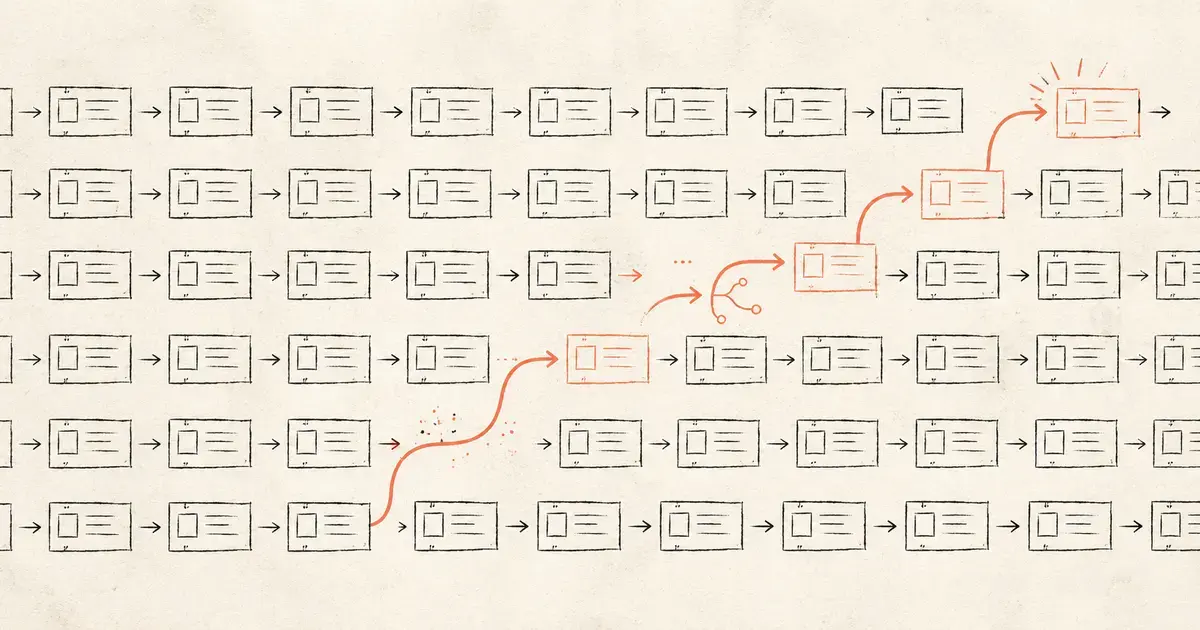
AI use case prioritization is the process of comparing potential AI initiatives to determine which ones deserve investment first, which require more preparation, and which should not move forward. Organizations typically evaluate candidates against factors such as business value, strategic relevance, feasibility, data readiness, implementation effort, risk, and the ability to measure results.
Prioritization becomes useful once an organization has identified several possible AI applications but cannot pursue all of them at once. Rather than allowing novelty, executive enthusiasm, or technical ease to determine what gets built, it creates a more consistent basis for deciding where limited resources should go.
What is AI use case prioritization?
AI use case prioritization turns a list of possible AI applications into a smaller, sequenced set of opportunities that the organization can evaluate, fund, and deliver more deliberately. It sits after AI use case discovery: first the organization identifies where AI might help, then it determines which of those opportunities are worth pursuing and in what order.
A candidate use case may involve generative AI, predictive models, AI agents, or a combination of AI and conventional automation. The technology matters less at this stage than the business problem being addressed, the conditions required to solve it, and whether the expected improvement justifies the work involved.
Prioritization should therefore produce more than a ranked list. It should also reveal dependencies. A high-value use case may need cleaner data, stronger integration, clearer process ownership, or additional governance before it is ready for implementation. In those cases, the right decision may be to prepare the foundation first rather than discard the opportunity.
Why is AI use case prioritization important?
Most enterprises can identify more possible AI projects than they have the budget, people, data, or implementation capacity to support at the same time. Prioritization helps direct those constraints toward opportunities with a credible combination of value and deliverability.
Without a consistent process, organizations can end up selecting projects because they are highly visible, easy to demonstrate, or supported by an enthusiastic stakeholder. That can produce pilots that work technically but have limited business value, or ambitious projects whose data, integrations, or operating conditions are not ready.
What criteria should organizations use to prioritize AI use cases?
AI use cases should be assessed across business value and the practical conditions required to deliver that value. No single criterion is enough on its own. A high-return idea may be unrealistic under current conditions, while an easy project may not create enough value to justify the attention it consumes.
Common criteria include:
- Business value: The operational, financial, customer, risk, or capacity improvement the use case is expected to create.
- Strategic relevance: How closely the initiative supports current business priorities rather than adding AI for its own sake.
- Measurability: Whether the current workflow has a useful baseline and the expected improvement can be evaluated after deployment. AI ROI becomes more credible when the outcome and the costs required to produce it can both be measured.
- Data readiness: Whether the information needed by the use case is available, reliable, accessible, and appropriately governed. A data readiness assessment may show that an attractive idea requires foundational work first.
- Technical feasibility: Whether the required models, applications, integrations, infrastructure, and engineering capabilities can support the proposed system.
- Process clarity: Whether the underlying workflow, decision points, exceptions, and ownership are understood well enough to introduce AI safely.
- Risk and governance: The consequences of incorrect outputs or actions, regulatory requirements, security concerns, human-review needs, and other controls the use case would require.
- Implementation effort and cost: The engineering work, integration burden, organizational change, operating cost, and time required to reach production. AI total cost of ownership can provide a broader view than initial build cost alone.
Organizations do not need to weight every criterion equally. A regulated decision may place much greater weight on risk and oversight, while an internal productivity workflow may give more weight to adoption, implementation effort, and measurable time savings.
How does an AI use case prioritization framework work?
A prioritization framework gives different AI opportunities a common basis for comparison, then uses the results to create a shortlist and implementation sequence. The framework may use scores, categories, a value-versus-feasibility matrix, or a combination of quantitative and qualitative assessment.
A practical process usually involves:
- Define the candidate clearly. Describe the business problem, intended users, workflow involved, expected outcome, and where AI would participate.
- Assess each use case against common criteria. Compare value, feasibility, data conditions, process clarity, risk, cost, and other factors relevant to the organization.
- Identify blockers and dependencies. Determine whether the use case can proceed now or depends on data, integration, governance, process, or infrastructure work first.
- Compare and shortlist. Separate promising candidates from low-value ideas, overly complex initiatives, or opportunities that need further preparation.
- Sequence the work. Decide what should be tested first, what should follow later, and what evidence the first implementation needs to produce.
The highest-scoring use case does not have to be the first one built. The first implementation should create enough value to matter while remaining realistic enough to test under current enterprise conditions. The Enterprise AI Operating Manual’s First Move chapter applies a similar selection discipline to the question of which AI use case should be built first.
For organizations evaluating agentic AI specifically, Agentic Advisory can extend prioritization into dependency analysis, system design, and the sequence required to move shortlisted opportunities toward production.
How is AI use case prioritization different from AI readiness and AI ROI?
AI use case prioritization decides which opportunities deserve attention and when. Related disciplines answer different questions about whether those opportunities can succeed and whether the investment makes economic sense.
|
Concept |
Primary question |
|
AI use case discovery |
Where could AI potentially improve a workflow or business outcome? |
|
AI use case prioritization |
Which identified opportunities deserve investment first, and in what order? |
|
AI Readiness |
Can the organization reliably support this use case under real operating conditions? |
|
Data Readiness |
Is the required data accessible, trustworthy, governed, and usable for this use case? |
|
AI ROI |
Is the expected business return worth the cost of building and operating the capability? |
These decisions influence one another. A strong prioritization process may identify a valuable use case that is not ready today, or a technically feasible project whose expected return is too limited. The purpose is to make those trade-offs visible before significant resources are committed.
Continue Exploring
AI use case prioritization becomes most valuable when an organization has moved beyond asking where AI could help and needs to decide where investment should actually begin. That decision depends on the business outcome, the conditions around the workflow, and what has to be true before the use case can reach production.
Fulcrum Digital helps organizations evaluate and sequence AI opportunities against business value, data readiness, process clarity, build complexity, and the dependencies that can affect implementation.
CTA button: Book a conversation
Related Reading
12 Enterprise Agentic AI Use Cases and the ROI Metrics That Matter in 2026
Not every AI opportunity creates value under the same conditions. This article examines 12 enterprise agentic AI use cases through the workflow involved, the business value available, relevant ROI metrics, and likely implementation complexity.
Related Questions
What makes a good first AI use case?
A good first AI use case addresses a meaningful business problem, has a measurable baseline, and can be implemented within manageable technical and operational boundaries. The organization should have sufficient access to the required data, understand how the underlying process works, and be able to evaluate whether the deployment improved the intended outcome.
Should enterprises prioritize the easiest AI use case first?
Not necessarily. Ease of implementation is useful, but it should be considered alongside business value, strategic relevance, and measurability. A moderately more complex use case may be a better starting point if it addresses a meaningful problem and can still be delivered within the organization’s current capabilities.
Can a high-value AI use case still be a low priority?
Yes. A use case may offer substantial potential value but remain a low immediate priority if its data is not ready, the process is poorly defined, integrations are missing, risks are difficult to control, or implementation costs are disproportionate. Prioritization distinguishes potential value from present deliverability.
How often should AI use cases be reprioritized?
AI use cases should be reassessed when important assumptions change. New business priorities, better data, new technical capabilities, regulatory changes, cost shifts, or completed foundation work can all change the relative value or feasibility of an initiative. A prioritization exercise should therefore inform a roadmap rather than create a permanent ranking.