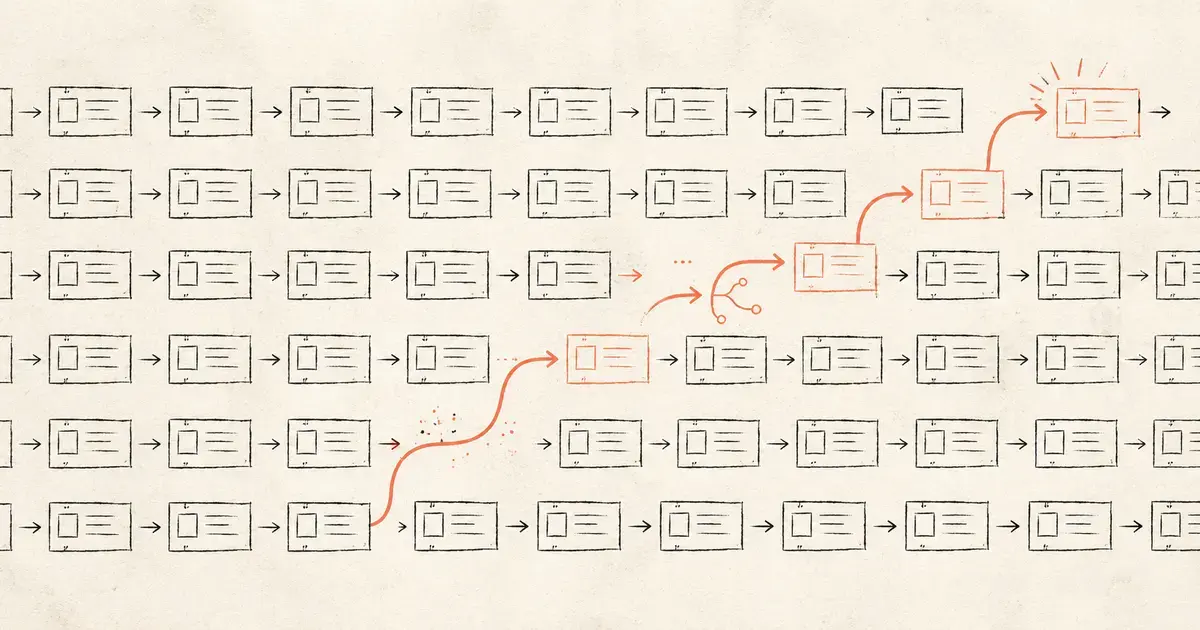
An enterprise agentic AI platform is a system that coordinates decisions and actions across workflows, rather than delivering isolated insights or automations.
As AI adoption scales, execution and coordination have become the primary constraints inside large organizations.
Agentic platforms address this gap by enabling AI systems to act with intent, context, and continuity across enterprise processes.
Enterprise-grade capabilities such as governance, observability, and integration are what make agentic AI viable inside real operations.
In 2026, enterprises are adopting this model to move AI from experimentation into sustained, system-level execution.
Enterprises have spent the last few years embedding AI into tools, workflows, and individual use cases. As those efforts scale, many organizations are discovering that isolated AI automationstarts to break down when decisions, execution, and accountability span multiple systems. That pressure is driving interest in a new category: the enterprise agentic AI platform.
The Shift from AI Features to AI Systems
An enterprise agentic AI platform is a system built to deploy and coordinate autonomous AI agentsthat can reason, make decisions, and act across enterprise workflows within defined constraints. Instead of focusing only on insights or task-level automation, this platform model is centered on agentic AIworking through AI workflow orchestrationto ensure execution remains consistent, accountable, and connected across systems. In doing so, it provides a foundation for AI-driven operations that can scale without sacrificing control, transparency, or alignment with AI governance requirements.As AI expanded across enterprise functions, it rarely evolved as a single system. Models surfaced insights in one place, automation ran in another, and execution often depended on people stitching the pieces together across tools and teams. Over time, the real constraint became less about what AI could predict and more about how decisions actually moved through the organization.
Banking & Financial Services: Decisions could be automated, but moving them reliably through core systems still required manual coordination.
Insurance: Strong analytical signals existed, yet claims and underwriting actions stalled as systems failed to move in sync.
Commerce & Retail: Pricing, inventory, and fulfillment decisions moved quickly, while execution lagged across disconnected platforms.
Manufacturing: Optimization happened upstream, but translating plans into coordinated production remained fragmented.
Logistics: Routes and capacity adjusted in real time, but downstream actions often failed to follow at the same pace.
In each case, the challenge sat in the handoffs: between insights and action, between systems, and between teams.That coordination gap is what enterprise agentic AI platforms are designed to address.
What Makes It Agentic
AI systems operate with intent, not just instructionAI agents are designed to pursue defined goals over time, allowing them to participate actively in workflows rather than respond to isolated prompts.Actions are taken as part of the system, not handed off to humansAgentic platforms apply AI operational intelligence to move from reasoning to action within approved boundaries, instead of stopping at recommendations.Multiple decisions are coordinated, not treated as standalone tasksA shared AI orchestration layer manages sequencing, dependencies, and handoffs so actions unfold coherently across steps.Context is maintained across steps and timeThrough AI decision intelligence, agentic systems retain awareness of prior actions, current state, and pending work across long-running processes.What Makes It Enterprise-GradeGovernance and compliance are built into executionEnterprise-grade platforms embed AI governance and AI compliance automation so decisions and actions follow policy and regulatory controls as they occur.Systems are observable, not opaqueAI observability provides visibility into how decisions were made and how systems behaved over time, enabling accountability and oversight.Integration spans systems of record, not just interfacesAI enterprise integration allows agents to operate across core platforms and workflows without brittle, point-to-point automation.Designed to align with long-term operating modelsEnterprise AI strategyis supported by platforms that scale agentic capabilities consistently with architectural and organizational constraints.
What’s Driving Enterprise Adoption in 2026
Adoption of enterprise agentic AI platforms is being driven less by experimentation and more by structural pressures that emerge at scale. As AI becomes embedded in core operations, enterprises are turning to platform models that can coordinate decisions, execution, and control across complex, interconnected systems.
Decision volume now exceeds human coordination capacity
At enterprise scale, decisions span systems, teams, and time horizons. Enterprise AI platforms are being adopted because manual coordination cannot keep up with this complexity, leading organizations to centralize decision flow and execution within a single, platform-based operating model.
Fraud and risk require coordinated, enterprise-wide response
Modern threat patterns cut across data sources and workflows. Enterprises are adopting platforms that unify AI fraud detection and AI risk managementso signals, controls, and actions operate together, rather than remaining fragmented across disconnected tools.
Customer experience has become a systems problem
Large organizations can no longer manage journeys in silos. Adoption is accelerating as enterprises use platforms to orchestrate AI customer experience across policy, data, and operational systems, instead of optimizing isolated channels or touchpoints.
Compliance workloads now operate continuously
Regulatory processes are no longer episodic. Enterprises are adopting platforms that can support AI KYC AML automationand AI loan processing automation as coordinated workflows, reducing manual handoffs while maintaining auditability and control.
Enterprises are consolidating around platform architecture
Tool sprawl has increased operational friction. Organizations are shifting toward AI-powered platformsto support enterprise-wide AI transformation, allowing agentic capabilities to operate within core systems rather than alongside them.
Efficiency gains depend on sustained execution
One-off automation delivers diminishing returns at scale. Enterprises are adopting platforms that improve AI operational efficiency by ensuring decisions carry through across systems and steps, instead of stalling after initial analysis.
Enterprise AI is entering a maturity phase
As experimentation gives way to production realities, enterprise agentic AI trends 2026 show growing adoption of platforms that embed AI intelligent automation directly into real operations, governance models, and enterprise architectures.Enterprise agentic AI platforms are rapidly emerging as a way to bring structure to how AI operates inside complex organizations. Fulcrum Digital works with companies to design and implement enterprise agentic AI platforms that align with real-world systems, regulatory realities, and long-term operating models, helping them scale agentic AI responsibly and with intent.