


The first AI decision is to understand your real starting point.

Built on Experience. Powered by Intelligence. Engineered for Scale & Interoperability. 

Before committing any AI investment, you need an honest view of where you truly are and not where you assumed youd be. Fulcrum Digitals Readiness & Assessment service tells you exactly what is blocking you and what to do first. Four weeks. Fixed scope. Real output. 

Three phases. One clearer understanding of what comes next.

Designed For Banks, Payment Providers, And Financial Platforms

Each phase is designed to reduce uncertainty around a different part of the AI journey, from understanding current readiness to identifying operational blockers and mapping the next stage of work. Organizations can move through the full sequence or begin at the point that best matches their current situation.

Know where you actually are. Then decide what to build.

Roadmaps move differently once the environment has been measured clearly enough to expose what is slowing progress underneath. 

WEEK 1–2: AI READINESS ASSESSMENT 

AI Readiness Assessment

Know your starting point 

The AI Readiness Assessment benchmarks your current environment across four dimensions: data, process, technology, and talent. It combines structured interviews with a technical review, then converts the findings into a numeric score against an AI-ready baseline. Each dimension is rated independently, so you can see which layers of the AI Operating Model are already in place, which need investment, and which are blocking the first agent deployment. 

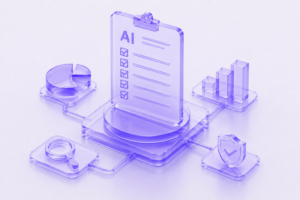
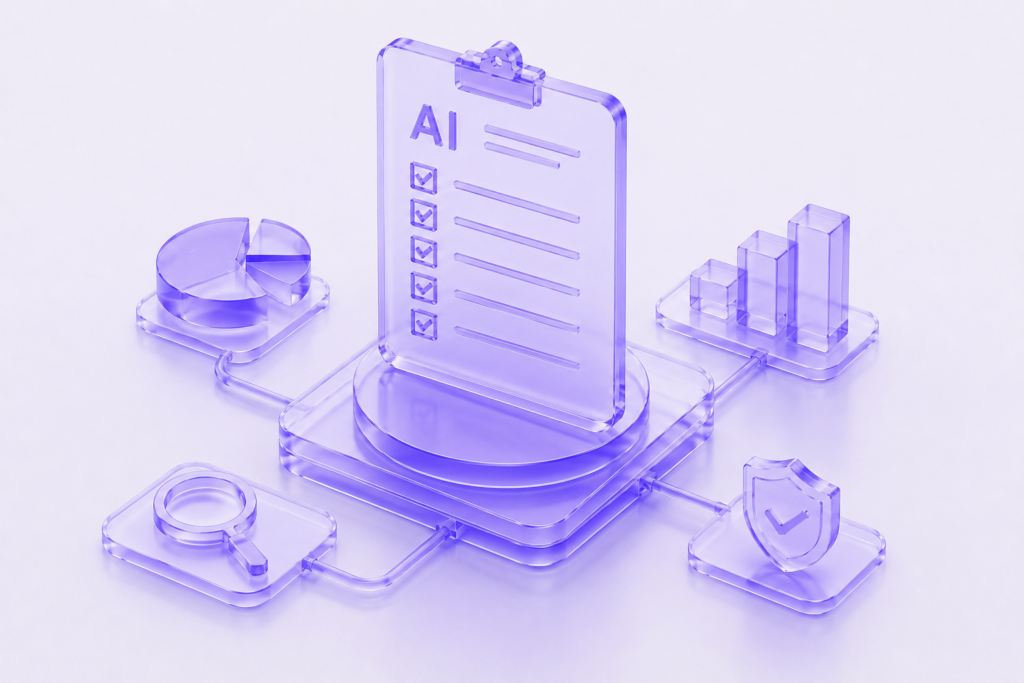
Futuristic 3D illustration of a magnifying glass auditing enterprise data, workflows, analytics, and process systems.

WEEK 2–3: DATA & PROCESS AUDIT  

Data & Process Audit

Identify the specific blockers 

he Data & Process Audit identifies the specific datasets, pipelines, and workflows affecting your first AI deployment. The output is a blockers matrix: a prioritized list of solvable issues, with effort estimates and impact scores for each one. Every blocker is assessed against agentic AI requirements, so engineering and advisory teams can see what needs to be fixed, in what order, before the next phase begins. 

WEEK 4: AI TRANSFORMATION ROADMAP 

AI Transformation Roadmap

A sequenced plan, not a strategy document 

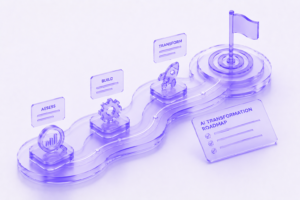
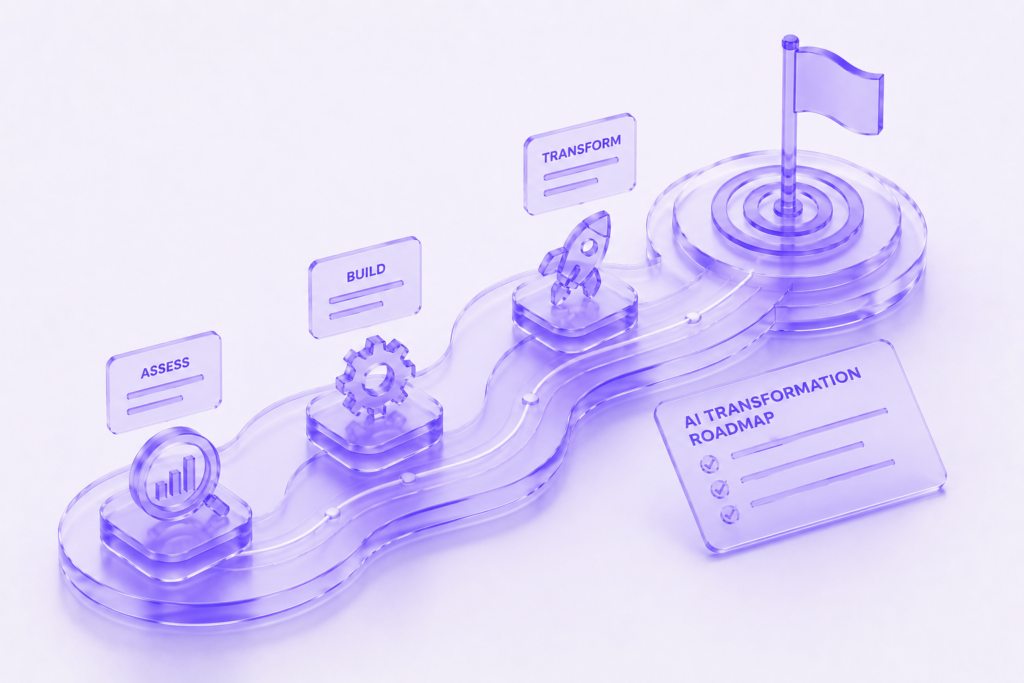
The AI Transformation Roadmap turns the readiness scores and blockers list into a sequenced 12–18 month plan. It maps work around capability dependencies, names the first moves, defines milestones, and shows where the path can branch based on what each phase delivers. The roadmap is built for handoff to engineering and advisory teams at the start of the next phase. 

This is not a discovery call in disguise.

The Assessment produces a scored report and a ranked blockers list, regardless of whether the next step is a Fulcrum engagement. You leave with something useful either way. That is what makes the output trustworthy. 

The friction usually starts here:


The assessment is often triggered by pressure from leadership teams, stalled projects, governance concerns, competing priorities, or uncertainty around what should happen first. The common pattern across all of them is limited visibility into the current foundation. 

Board Mandate. Unclear Starting Point
You have budget and a board mandate. You don’t have a sequenced plan. The mandate arrived before the visibility did. 

Every vendor you’ve spoken to has assumed you’re further along than you are. The Assessment gives you an independent, scored view before you commit to any direction. 

Failed Or Stalled Ai Project
The project stalled. The root cause stayed hidden. 

The Assessment identifies which of the four dimensions was the actual root cause—data, process, technology, or talent—with enough specificity to prevent the same failure next time. 

Competing Internal Priorities
Every department wants AI funding first. 

Use Case Prioritization (in Agentic Advisory) helps you narrow down AI ideas. The Assessment helps you understand which of those ideas your current foundation can actually support without additional infrastructure investment. 

Governance Or Compliance Pressure
AI governance became urgent overnight. 

The Assessment covers governance readiness as part of the technology dimension and the roadmap maps governance investments alongside technical ones so they are never treated as separate workstreams. 

Data Concerns Blocking Progress
The data issue is real. The fix list is still missing. 

The Data & Process Audit gives you a specific blockers matrix instead of a general recommendation to “improve data quality.” Specific datasets, specific issues, effort estimates for each fix. 

Advisory Or Engineering Engagement Pending
The roadmap is entering delivery mode too early. 

The Assessment and Roadmap are designed to feed directly into Agentic Advisory (Phase 01: Use Case Prioritization) and AI Operating Model work. Running it first removes the diagnostic phase from the advisory engagement itself. 
Assessment is the starting point. Not the finish line.

The next phase depends on what the roadmap reveals about readiness, governance, operational gaps, and deployment sequencing. 

If The Foundation Needs Building:
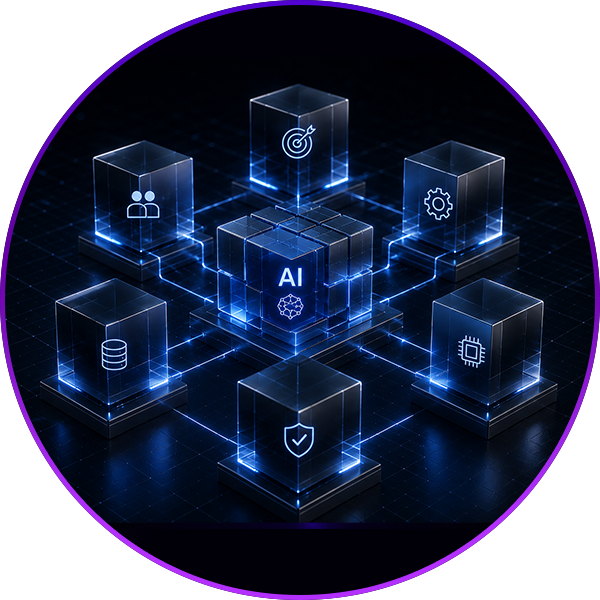
AI Operating Model 

When the assessment surfaces gaps in governance, process maturity, or operational readiness, the AI Operating Model becomes the next phase of work, covering Data Engineering, Process Engineering, AI Engineering, and Governance & Reliability in the sequence the environment requires. 
If The Foundation Is Ready:
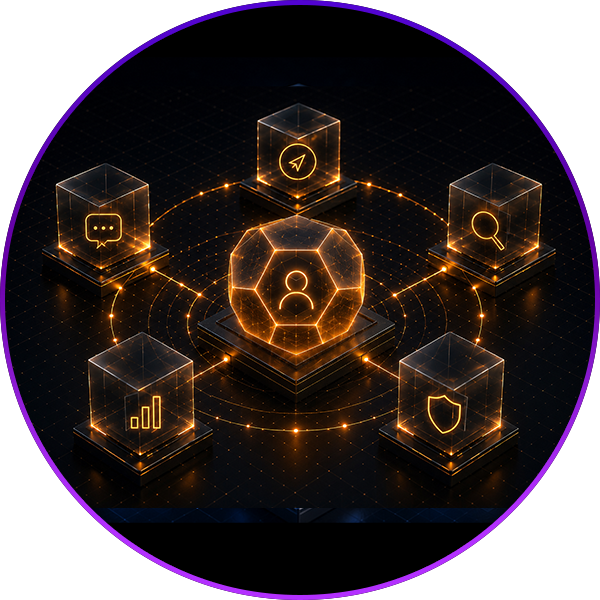
Agentic Advisory 

When the assessment shows that the environment can support deployment planning, Agentic Advisory becomes the next step, covering Use Case Prioritization, Agentic System Design, Pilot to Production, and Change & Adoption based on the conditions revealed during the assessment. 
If A Product Is Ready For Implementation :
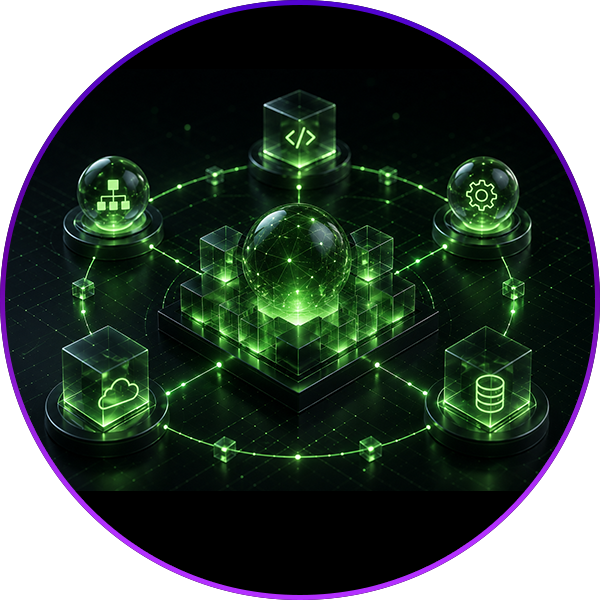
AI-Native Engineering 

When the assessment confirms that a specific use case and its supporting foundation are ready for implementation, AI-Native Engineering becomes the deployment path, starting with the SDLC Super Agent or a direct FD RYZE® Nexus rollout. 

What You Leave With:

AI Readiness Assessment
Data & Process Audit
AI Transformation Roadmap

Frequently Asked Questions

1. What does the Assessment cost and what is included?

The Assessment is a fixed-scope engagement delivered over four weeks. Pricing is confirmed during the initial scoping call. The engagement includes structured interviews with business and technical stakeholders, a technical review of the current environment, a scored readiness report, a blockers matrix covering data and process issues, and a 12–18 month transformation roadmap. The scope is defined upfront, with deliverables tied directly to the three assessment phases. 

2. Are we obligated to continue with Fulcrum after the Assessment?

No. The scored report, blockers matrix, and roadmap are your deliverables to keep and use with any partner or internal team. The assessment is designed to stand on its own as a diagnostic and planning engagement, regardless of what happens next. 

3. How is this different from a discovery call or scoping session?

A discovery call is designed to frame a proposal. The Assessment is designed to evaluate the current environment through structured interviews, technical review, readiness scoring, and blockers analysis. The output is a scored baseline, a ranked blockers list, and a roadmap tied to the conditions uncovered during the engagement. 

4. How do you score AI readiness?

The readiness score is based on structured assessment across four dimensions: data, process, technology, and talent. Each dimension is reviewed independently through stakeholder interviews and technical evaluation, then measured against an AI-ready baseline used throughout the engagement. 

5. Do we need all three phases, or can we start with the readiness assessment only?

You can engage Phase 01 independently if the immediate goal is a scored readiness baseline. Many organizations continue into the audit and roadmap phases once the readiness assessment exposes operational gaps, dependencies, or deployment constraints that require deeper analysis. 

6. What level of involvement is required from our team?

The engagement typically involves four to six stakeholders, including technical, operational, data, and governance representatives. The technical review requires access to current architecture and infrastructure documentation. Most organizations spend two to four hours per week supporting interviews, reviews, and working sessions across the four-week engagement. 

Engineering That Meets the Moment
When timing matters, so does the partner you build with.

Message us, call us, or book a meeting. We’re ready to help you design, build, and scale what’s next.

Send Us A Message

Thank you, we'll be in touch shortly.

Need More Info?

Message us & we will get back to you ASAP! 

Schedule Appointment

Fill out the form below, and we will be in touch shortly.